Quantifying the Energy Barrier: A Comprehensive Guide to Activation Energy Measurement in Chemisorption for Biomedical Research
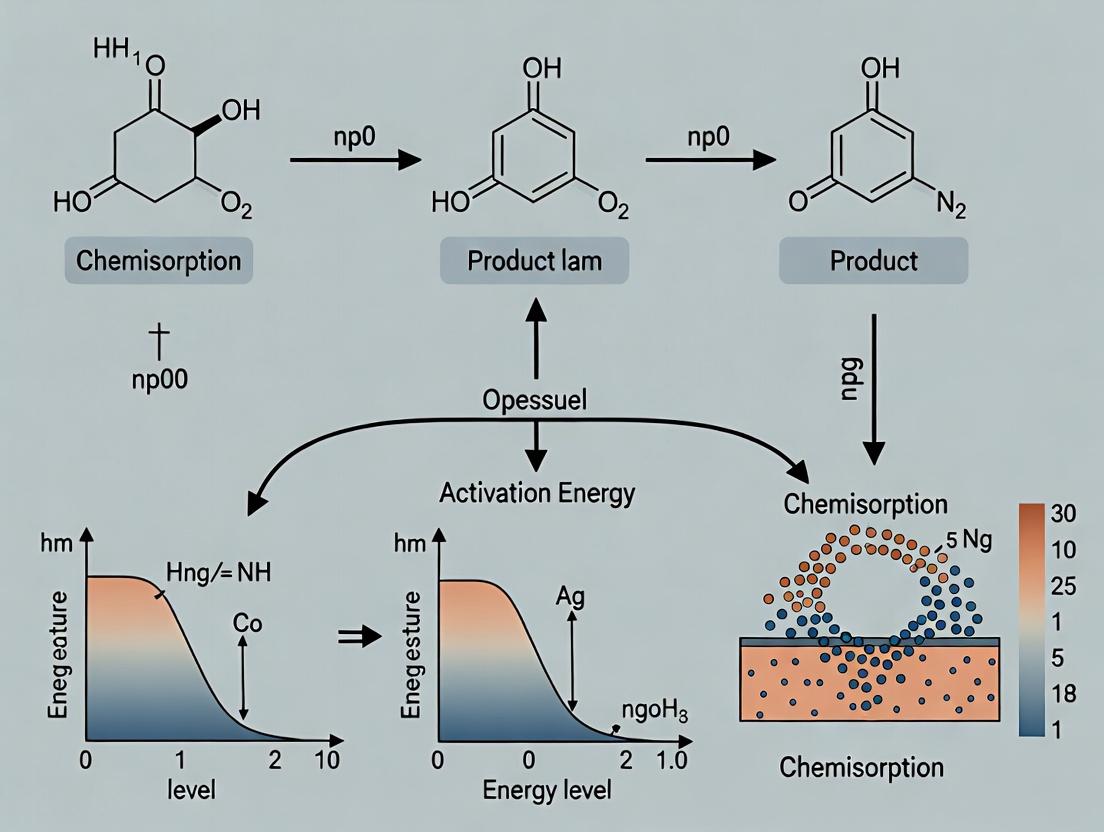
This article provides researchers, scientists, and drug development professionals with a detailed, contemporary guide to measuring activation energy in chemisorption processes—a critical parameter in catalysis, sensor design, and drug discovery.
Quantifying the Energy Barrier: A Comprehensive Guide to Activation Energy Measurement in Chemisorption for Biomedical Research
Abstract
This article provides researchers, scientists, and drug development professionals with a detailed, contemporary guide to measuring activation energy in chemisorption processes—a critical parameter in catalysis, sensor design, and drug discovery. We explore the foundational theory connecting activation energy to surface reaction kinetics, detail advanced methodological approaches like Temperature-Programmed Desorption (TPD) and microcalorimetry, address common experimental pitfalls and optimization strategies, and validate findings through comparative analysis with spectroscopic and computational techniques. The content synthesizes current best practices to enable accurate characterization of molecular binding events for applications in targeted drug delivery, biomaterial development, and enzymatic catalysis.
Understanding the Energy Barrier: The Critical Role of Activation Energy in Chemisorption Kinetics
Understanding adsorption processes is fundamental to catalysis, sensor technology, and drug delivery systems. This application note delineates the core distinctions between chemisorption and physisorption, and introduces the critical concept of the transition state, within the context of measuring activation energies for chemisorption processes.
Comparative Analysis: Chemisorption vs. Physisorption
The table below summarizes the key quantitative and qualitative differences between the two adsorption types.
Table 1: Comparative Properties of Physisorption and Chemisorption
| Property | Physisorption | Chemisorption |
|---|---|---|
| Driving Force | van der Waals interactions | Chemical bond formation |
| Interaction Energy | 5 - 50 kJ/mol | 40 - 800 kJ/mol |
| Specificity | Non-specific | Highly specific to adsorbate/surface pair |
| Temperature Range | Occurs near adsorbate boiling point; decreases with T | May increase with T; often requires activation |
| Reversibility | Fully reversible | Often irreversible or requires high energy for desorption |
| Layer Thickness | Multilayer possible | Typically monolayer only |
| Activation Energy (Eₐ) | Negligible | Significant, often > 20 kJ/mol |
| Role in Catalysis | Pre-cursor state; reactant concentration | Essential for bond breaking/forming |
The Transition State in Chemisorption
The transition state represents the highest-energy configuration along the reaction coordinate from a gaseous molecule to a chemisorbed species. It is characterized by partial bond formation with the surface and weakening of intramolecular bonds within the adsorbate. The activation energy (Eₐ) is the energy difference between the initial state and this transition state, and its measurement is a primary objective in surface science research.
Experimental Protocols for Activation Energy Measurement
Protocol 4.1: Temperature-Programmed Desorption (TPD) for Eₐ Estimation
Objective: Determine the activation energy for desorption (E_des), often approximated as Eₐ for non-activated chemisorption. Materials: Ultra-high vacuum (UHV) chamber, mass spectrometer (QMS), temperature-controlled sample stage, calibrated heating filament. Procedure:
- Clean the single-crystal or well-defined surface under UHV using cycles of sputtering and annealing.
- Expose the clean surface to a known, controlled dose of the adsorbate gas at low temperature (e.g., 100 K).
- With the QMS tuned to the adsorbate's primary mass fragment, linearly ramp the sample temperature (β = dT/dt, typically 1-10 K/s).
- Record the desorption rate (mass spectrometer signal) as a function of temperature.
- Analyze the resulting TPD spectrum. For a simple first-order desorption, the Polanyi-Wigner equation applies:
-dθ/dT = (ν/β) * θⁿ * exp(-E_des/RT). The peak temperature (T_p) shifts with coverage and heating rate. - Perform experiments at multiple heating rates (β). Plot
ln(β/T_p²)vs.1/T_p(from the Redhead equation). The slope yields-E_des/R, providing an estimate of Eₐ.
Protocol 4.2: Isosteric Heats of Adsorption via Microcalorimetry
Objective: Directly measure the differential heat of adsorption as a function of coverage, providing insight into adsorption energetics and surface heterogeneity. Materials: Single-crystal adsorption calorimeter (SCAC), pulsed molecular beam doser, sensitive thermopile or pyroelectric detector. Procedure:
- Calibrate the calorimeter's thermal response using a known laser pulse energy.
- Under UHV, prepare a clean, well-characterized surface.
- Direct precisely controlled, sub-monolayer pulses of gas onto the surface.
- Measure the tiny temperature rise (ΔT) of the sample for each gas pulse using the thermopile.
- Simultaneously, measure the sticking probability using a rotatable mass spectrometer.
- The heat released per mole of adsorbed gas (differential heat) is calculated from ΔT and the number of adsorbed molecules.
- Plot differential heat vs. coverage. A constant high value indicates non-dissociative chemisorption on a uniform surface. A decreasing trend indicates surface heterogeneity or adsorbate-adsorbate repulsion.
- The initial heat at zero coverage approximates the sum of the activation energy and the energy released upon bond formation.
Visualizing the Chemisorption Pathway and Energetics
Title: Energy Pathway for Chemisorption on a Surface
The Scientist's Toolkit: Key Research Reagent Solutions
Table 2: Essential Materials for Chemisorption and Activation Energy Studies
| Item | Function / Purpose |
|---|---|
| Single-Crystal Metal Surfaces (e.g., Pt(111), Cu(110)) | Provides a well-defined, atomically flat substrate with known coordination sites, essential for fundamental mechanistic studies. |
| Ultra-High Vacuum (UHV) System (<10⁻⁹ mbar) | Removes contaminant gases to ensure a pristine surface and prevent interference during adsorption experiments. |
| Quadrupole Mass Spectrometer (QMS) | Detects and quantifies desorbing species during TPD, identifies reaction products, and monitors chamber composition. |
| Low-Energy Electron Diffraction (LEED) / Auger Electron Spectroscopy (AES) | LEED verifies surface crystallinity and reconstruction. AES confirms elemental surface cleanliness. |
| Pulsed Molecular Beam Doser | Delivers precise, quantifiable doses of adsorbate gas to the surface for kinetic and calorimetric measurements. |
| Single-Crystal Adsorption Calorimeter (SCAC) | Directly measures the heat released upon adsorption with microjoule sensitivity, enabling direct Eₐ and ΔH determination. |
| Density Functional Theory (DFT) Software (e.g., VASP, Quantum ESPRESSO) | Computationally models adsorption geometries, energies, and identifies transition states, providing atomic-level insight. |
| Calibrated Temperature Controller & Heater (e.g., e-beam, resistive) | Enables precise linear temperature ramping (for TPD) and isothermal control for kinetic studies. |
Activation energy (Ea) is a fundamental kinetic parameter that dictates the rate and pathway specificity of biomolecular interactions, from enzyme-substrate binding to protein-ligand association. Within the broader thesis on chemisorption processes, measuring Ea for biomolecular systems provides a quantitative bridge between thermodynamic driving forces and observed kinetic behavior. This is critical for drug development, where selectivity and binding kinetics often determine efficacy and safety. This Application Note details protocols for determining activation energies and discusses their direct implications on reaction rate and selectivity in biological contexts.
Core Principles and Quantitative Data
The Arrhenius equation (k = A e^(-Ea/RT)) formalizes the exponential relationship between rate constant (k) and Ea. A small decrease in Ea leads to a dramatic increase in reaction rate. Furthermore, selectivity in competitive pathways is governed by the difference in activation energies (ΔΔEa‡) for the competing reactions.
Table 1: Impact of Activation Energy on Rate Constant at 37°C
| Activation Energy (Ea) kJ/mol | Relative Rate Constant (k) | Implication for Biomolecular Interaction |
|---|---|---|
| 50 | 1.0 (Baseline) | Typical for diffusion-limited encounters |
| 60 | 0.14 | 7-fold slower; may indicate a required conformational change |
| 40 | 7.4 | 7-fold faster; optimized enzymatic transition state |
| 70 | 0.02 | 50-fold slower; highly hindered interaction |
Table 2: Experimental Techniques for Ea Determination in Biomolecular Systems
| Technique | Measured Parameter | Typical Ea Range | Key Advantage for Selectivity Studies |
|---|---|---|---|
| Stopped-Flow Spectroscopy | k_obs at varied T | 20-100 kJ/mol | Millisecond resolution for fast binding |
| Surface Plasmon Resonance (SPR) | kon, koff at varied T | 40-120 kJ/mol | Label-free, direct measurement on immobilized target |
| Isothermal Titration Calorimetry (ITC) | k, ΔH‡ at varied T | 30-90 kJ/mol | Simultaneous determination of ΔH‡ and ΔS‡ |
| NMR Relaxation Dispersion | k_ex at varied T | 40-80 kJ/mol | Probes hidden excited states and conformational selection |
Protocols
Protocol 1: Determining Ea for a Protein-Ligand Binding Interaction via Surface Plasmon Resonance (SPR)
This protocol details the extraction of kinetic activation energies from temperature-dependent SPR data, relevant to chemisorption studies on functionalized biosensor surfaces.
I. Materials & Reagent Setup
- SPR Instrument (e.g., Biacore series, Cytiva) with active temperature control (±0.1°C).
- Sensor Chip: CMS chip pre-immobilized with target protein via standard amine coupling.
- Running Buffer: HEPES-buffered saline (HBS-EP: 10 mM HEPES, 150 mM NaCl, 3 mM EDTA, 0.05% v/v Surfactant P20, pH 7.4). Degas and filter (0.22 µm).
- Ligand Solutions: Serial dilutions of analyte ligand in running buffer. Minimum 5 concentrations covering 0.1x to 10x KD.
- Regeneration Solution: 10 mM Glycine-HCl, pH 2.0 (or optimized condition).
II. Experimental Procedure
- Temperature Calibration: Perform a solvent correction run at each experimental temperature (e.g., 5, 10, 15, 20, 25, 30°C).
- Kinetic Series: For each temperature: a. Prime system with running buffer equilibrated to the set temperature. b. Program a multi-cycle method with contact time (association) of 60-180s and dissociation time of 120-300s. c. Inject analyte concentrations in random order, using duplicate middle concentrations for reproducibility. d. Perform a regeneration injection between cycles to fully reset the surface.
- Data Collection: Collect sensorgrams for all concentrations at all temperatures.
III. Data Analysis & Ea Calculation
- Global Fitting: Fit the collective dataset for each temperature to a 1:1 Langmuir binding model using the instrument's software (e.g., Biacore Evaluation Software) to extract kon and koff.
- Arrhenius Plot Construction: a. For kon (or koff), plot ln(k) vs. 1/T (where T is in Kelvin). b. Perform linear regression. The slope is equal to -Ea / R (where R = 8.314 J mol⁻¹ K⁻¹). c. Calculate Ea_on = -slope * R.
- Selectivity Index: For two competing ligands (A & B), calculate ΔΔEa‡ = |EaA - EaB|. A ΔΔEa‡ > 5 kJ/mol typically signifies significant kinetic selectivity.
Protocol 2: Computational Estimation of Ea via Umbrella Sampling Molecular Dynamics
This protocol provides a computational method to estimate the activation barrier for a ligand binding/unbinding process, complementing experimental chemisorption studies.
I. System Preparation
- Obtain starting structures for protein and ligand. Place ligand in bulk solvent >20 Å from binding pocket.
- Solvate the system in a TIP3P water box with 10 Å padding. Add ions to neutralize charge.
- Energy minimize and equilibrate (NVT then NPT) the system using standard parameters (AMBER/CHARMM force fields).
II. Reaction Coordinate and Sampling
- Define Reaction Coordinate (ξ): Use the distance between the ligand's center of mass and the binding site's center of mass.
- Umbrella Sampling: Run a series of independent simulations (windows), each with a harmonic biasing potential applied to ξ, covering the full path from bound to unbound states (e.g., 2-30 Å in 1 Å increments).
- Production Runs: Run each window for 20-50 ns, saving trajectories for analysis.
III. Free Energy & Ea Calculation
- Use the Weighted Histogram Analysis Method (WHAM) to combine data from all windows and construct the Potential of Mean Force (PMF) – the free energy profile along ξ.
- Identify the maximum point on the PMF between the bound and unbound minima. This represents the transition state.
- The activation energy (Ea) is approximated as the difference in free energy between this transition state and the reactant (bound or unbound) state: Ea ≈ ΔG‡.
The Scientist's Toolkit: Key Research Reagent Solutions
Table 3: Essential Materials for Biomolecular Activation Energy Studies
| Item / Reagent | Function in Ea Research | Example/Note |
|---|---|---|
| High-Precision Thermoelectric Cell Holder | Maintains exact temperature (±0.1°C) in spectrophotometers for Arrhenius plots. | Quantum Northwest TC1; required for Protocol 1 adaptation in stopped-flow. |
| Amine Coupling Kit (NHS/EDC) | Immobilizes biomolecules on SPR sensor chips for kinetic analysis. | Cytiva BR-1000-50; standard for creating a stable chemisorbed surface. |
| Stable Isotope-Labeled Biomolecules | Enables detailed kinetic and transition-state analysis via NMR techniques. | ¹⁵N-labeled proteins for NMR relaxation dispersion studies. |
| Molecular Dynamics Software Suite | Simulates binding pathways and computes free energy profiles. | GROMACS, NAMD, or AMBER with PLUMED plugin for umbrella sampling. |
| High-Affinity Regeneration Buffers | Remains bound analyte from biosensor surfaces without damaging immobilized target. | Low pH glycine, high pH NaOH, or specific chelators/scaffolds. |
Visualizations
Within a broader thesis on activation energy measurement for chemisorption processes research, understanding the kinetics of surface reactions is fundamental. The Arrhenius equation provides the empirical relationship between reaction rate and temperature, while Transition State Theory (TST) offers a theoretical framework for understanding the pathway and energy landscape of elementary surface processes. This synergy is critical for researchers and drug development professionals working on heterogeneous catalysis, sensor design, and drug delivery systems where surface interactions dictate efficacy.
Core Theoretical Application Notes
The Arrhenius Equation in Surface Kinetics
The Arrhenius equation, ( k = A e^{-Ea/(RT)} ), describes the temperature dependence of the rate constant ( k ) for surface processes like adsorption, desorption, and surface-catalyzed reactions. The pre-exponential factor ( A ) is interpreted as the frequency of attempts to overcome the energy barrier, and the activation energy ( Ea ) is the minimum energy required for the process to occur. For chemisorption, ( E_a ) is a key descriptor of bond strength and surface reactivity.
Transition State Theory for Surface Elementary Steps
TST postulates a quasi-equilibrium between reactants and an activated complex (transition state) at the top of the energy barrier. For a surface reaction ( A{(ads)} + * \rightarrow TS^\ddagger \rightarrow Product ), the rate is given by: ( k = \kappa \frac{kB T}{h} K^\ddagger ) where ( \kappa ) is the transmission coefficient (often ~1), ( kB ) is Boltzmann's constant, ( h ) is Planck's constant, and ( K^\ddagger ) is the equilibrium constant between reactants and the transition state. The Gibbs free energy of activation ( \Delta G^\ddagger ) is derived from ( K^\ddagger ), encompassing enthalpic (( \Delta H^\ddagger ), related to ( Ea )) and entropic (( \Delta S^\ddagger ), related to ( A )) components.
Table 1: Kinetic Parameters for Model Surface Chemisorption Processes
| Adsorbate/System | Reported E_a (kJ/mol) | Pre-exponential Factor, A (s⁻¹ or site⁻¹s⁻¹) | Theoretical Method / Experiment | Key Reference (Year) |
|---|---|---|---|---|
| CO on Pd(111) | 65 - 85 | 10^13 - 10^15 | Temperature Programmed Desorption (TPD) | Surf. Sci. Rep. (2021) |
| H₂ on Pt nanoparticles | 10 - 25 | 10^12 - 10^13 | Microkinetic Modeling & DFT | J. Catal. (2022) |
| O₂ dissociation on Au/CeO₂ | 45 | 5.0 x 10^11 | DFT + TST Calculation | ACS Catal. (2023) |
| Drug Molecule X on SiO₂ model surface | 72.4 | 2.2 x 10^13 | Isothermal Adsorption Kinetics | Langmuir (2023) |
Experimental Protocols for Activation Energy Determination
The following protocols are designed for application within chemisorption energy measurement research.
Protocol 1: Temperature Programmed Desorption (TPD) for ( E_a ) of Desorption
Principle: The activation energy for desorption (( E{des} )) is obtained by analyzing the peak temperature (( Tp )) of desorption spectra at different heating rates (( \beta )).
Materials: Ultra-High Vacuum (UHV) chamber, single crystal or well-defined substrate, mass spectrometer, sample holder with direct heating and temperature probe, gas dosing system.
Procedure:
- Surface Preparation: Clean the substrate in UHV via cycles of sputtering (Ar⁺ ions, 1 keV, 10 μA, 30 min) and annealing (e.g., 1000 K for 2 min). Verify cleanliness with Auger Electron Spectroscopy (AES).
- Adsorption: Expose the clean, cooled surface (typically 100 K) to a defined dose (in Langmuirs, L) of the adsorbate (e.g., CO) using a calibrated doser.
- TPD Experiment: Ramp the sample temperature linearly at different heating rates ( \beta ) (e.g., 1, 2, 5, 10 K/s). Monitor the partial pressure of the desorbing species (( m/z ) signal) versus temperature using a mass spectrometer.
- Data Analysis (Redhead / Kissinger Methods):
- Plot ( \ln(\beta / Tp^2) ) vs. ( 1/Tp ) for each heating rate (Kissinger plot).
- The slope is ( -Ea / R ), yielding ( E{des} ). The intercept relates to the pre-exponential factor.
Protocol 2: Isothermal Chemisorption Kinetics for ( E_a ) of Adsorption/Reaction
Principle: Measure the rate constant ( k ) at multiple temperatures under isothermal conditions. Plot ( \ln(k) ) vs. ( 1/T ) (Arrhenius plot) to extract ( E_a ) and ( A ).
Materials: Flow microreactor or batch adsorption system, mass flow controllers, precise temperature control furnace, in-situ spectroscopic probe (e.g., DRIFTS, QCM) or downstream gas analyzer (GC, MS).
Procedure:
- System Calibration: Calibrate the analytical signal (e.g., MS intensity, QCM frequency shift) against known adsorbate coverage or concentration.
- Isothermal Uptake Measurement: At a fixed temperature ( T_1 ), expose the clean catalyst/surface to a step-change in adsorbate partial pressure. Monitor the transient uptake signal until equilibrium.
- Kinetic Fitting: Fit the uptake curve to an appropriate kinetic model (e.g., Langmuirian adsorption) to extract the rate constant ( k(T_1) ).
- Temperature Variation: Repeat steps 2-3 for at least 4-5 different temperatures within a stable range.
- Arrhenius Analysis: Construct a table of ( k(T) ) vs. ( T ). Plot ( \ln(k) ) vs. ( 1/T ) (in K⁻¹). Perform a linear fit: Slope = ( -E_a/R ), Intercept = ( \ln(A) ).
The Scientist's Toolkit: Key Research Reagent Solutions & Materials
Table 2: Essential Materials for Surface Kinetics Studies
| Item / Reagent | Function / Role in Experiment |
|---|---|
| Single Crystal Metal Surfaces (e.g., Pt(111), Pd(100)) | Provides a well-defined, atomically clean substrate with known structure for fundamental studies, enabling comparison with theory. |
| Model Catalyst Nanoparticles on Oxide Supports | Bridges the materials gap between single crystals and real-world powdered catalysts. Used in microreactor studies. |
| Calibrated Gas Dosing System (UHV) | Delivers precise, reproducible doses of adsorbate gases (CO, H₂, O₂) onto surfaces for quantitative coverage determination. |
| Quadrupole Mass Spectrometer (QMS) | The primary detector in UHV-TPD for identifying and quantifying desorbing species with high sensitivity. |
| Quartz Crystal Microbalance (QCM) with Coated Sensor | Measures mass changes (ng/cm²) in real-time during adsorption/desorption in various environments, including liquid phase. |
| Temperature Controller & Resistive Heater | Enables precise linear temperature ramping (for TPD) and stable isothermal control (for kinetic studies). |
| Density Functional Theory (DFT) Software (e.g., VASP, Quantum ESPRESSO) | Calculates adsorption energies, identifies transition states, and computes vibrational frequencies for theoretical ( E_a ) and ( A ). |
| High-Purity Gases (≥99.999%) with In-line Purifiers | Ensures the absence of contaminants (e.g., metal carbonyls in CO) that can poison surfaces and skew kinetic data. |
| Standardized Porous Materials (e.g., NIST-certified silicas) | Provides a reference substrate with known surface area and chemistry for benchmarking adsorption kinetics of drug molecules. |
Visualizations
Diagram 1: Energy Landscape for Surface Chemisorption
Diagram 2: TPD Kinetic Analysis Protocol
Within the broader thesis on activation energy (Ea) measurement in chemisorption processes, this application note details the critical factors governing Ea. Accurate quantification is paramount for researchers in catalysis, sensor development, and drug delivery systems where surface interactions define efficacy. This document provides structured data, detailed protocols, and essential resources for systematic investigation.
Table 1: Influence of Surface Morphology on Activation Energy for CO Chemisorption
| Surface Facet (Pt) | Step Density (atoms/nm) | Measured Ea (kJ/mol) | Technique | Reference Year |
|---|---|---|---|---|
| Pt(111) | 0.1 | 85 ± 5 | TPD | 2023 |
| Pt(100) | 0.5 | 72 ± 4 | TPD | 2023 |
| Pt(210) (stepped) | 3.2 | 58 ± 3 | TPD/DFT | 2024 |
| Pt Nanoparticle (5nm) | N/A | 65 ± 7 | Microcalorimetry | 2024 |
Table 2: Effect of Adsorbate Structure on Ea for Alkanol Adsorption on Pd
| Adsorbate | Chain Length | Functional Group | Ea (kJ/mol) | ΔEa from Methanol |
|---|---|---|---|---|
| Methanol | C1 | -OH | 45 ± 2 | 0 |
| Ethanol | C2 | -OH | 52 ± 3 | +7 |
| 1-Propanol | C3 | -OH | 60 ± 2 | +15 |
| 2-Propanol | C3 | -OH (secondary) | 48 ± 3 | +3 |
Table 3: Electronic Effects via Alloying on H₂ Dissociative Chemisorption Ea
| Catalyst System | d-band Center (eV) | Ea for H₂ (kJ/mol) | Turnover Frequency (s⁻¹) |
|---|---|---|---|
| Ni(111) | -1.5 | 25 ± 2 | 1.2 x 10³ |
| Pt(111) | -2.2 | 15 ± 1 | 5.0 x 10⁴ |
| Pt₃Ti(111) | -3.1 | 8 ± 2 | 2.1 x 10⁵ |
| Cu(111) | -4.5 | 65 ± 5 | 10 |
Experimental Protocols
Protocol 1: Temperature-Programmed Desorption (TPD) for Ea Determination
Objective: Measure activation energy of desorption (correlated to chemisorption strength) via controlled heating. Materials: Ultra-High Vacuum (UHV) chamber, single crystal surface, quadrupole mass spectrometer (QMS), resistive heater with precise temperature controller, cryostat. Procedure:
- Surface Preparation: Clean the single crystal (e.g., Pt(111)) in UHV using repeated cycles of Ar⁺ sputtering (1 keV, 15 μA, 30 min) followed by annealing at 1000 K for 2 minutes. Verify cleanliness with Auger Electron Spectroscopy (AES).
- Adsorption: Cool the crystal to 100 K using liquid nitrogen cryostat. Expose the clean surface to the probe gas (e.g., CO) at a precise pressure (e.g., 1 x 10⁻⁸ Torr) for a defined time (e.g., 60 s) to achieve a known coverage (e.g., 0.25 ML).
- Temperature Ramp: Isolate the crystal from the gas source. Ramp the temperature linearly (β = dT/dt, typically 1-5 K/s) using the resistive heater. Monitor the crystal temperature with a K-type thermocouple spot-welded to its edge.
- Signal Acquisition: Record the partial pressure of the desorbing species (e.g., m/z = 28 for CO) versus temperature using the QMS. Ensure the QMS signal is proportional to the desorption rate.
- Data Analysis (Redhead Method): For first-order desorption, estimate Ea using the formula: Ea / RTₚ ≈ ln(ν₁Tₚ / β) - 3.64, where Tₚ is the peak desorption temperature and ν₁ is the pre-exponential factor (typically assumed as 1x10¹³ s⁻¹). For more accurate determination, use a series of experiments with varying heating rates (β) and apply the Arrhenius plot method.
Protocol 2: Scanning Tunneling Microscopy (STM) for Morphology & Adsorbate Structure Analysis
Objective: Characterize surface morphology and adsorbate structure at atomic-scale pre/post chemisorption. Materials: UHV-STM system, electrochemically etched tungsten tips, single crystal sample, sample heating/cooling stage. Procedure:
- Tip and Sample Preparation: Clean the tungsten tip via electron beam bombardment and field emission in UHV. Prepare the sample surface as in Protocol 1, Step 1.
- Imaging Pre-Adsorption: Obtain high-resolution, constant-current topographs of the clean surface at low temperature (e.g., 77 K) to document terrace width, step edges, and defect density.
- Dosing: Introduce the adsorbate gas at low temperature (77 K) to immobilize molecules.
- Imaging Post-Adsorption: Re-image the same surface region. Identify adsorption sites (atop, bridge, hollow), molecular orientation, and any adsorbate-induced surface reconstruction.
- Spectroscopy (Optional): Perform dI/dV spectroscopy at specific sites to probe local electronic structure changes (e.g., shifts in surface state resonances) induced by chemisorption.
Diagrams
Fig 1: Core Factors Influencing Chemisorption Ea
Fig 2: TPD Workflow for Ea Measurement
The Scientist's Toolkit: Research Reagent Solutions
Table 4: Essential Materials for Chemisorption Ea Studies
| Item/Category | Specific Example & Supplier (Representative) | Function in Research |
|---|---|---|
| Single Crystal Surfaces | Pt(111) disk, 10mm dia (Surface Preparation Lab) | Provides a well-defined, atomically flat surface to correlate morphology with Ea. |
| Calibrated Gas Dosing System | Precision leak valve & doser tubes (Specs Group) | Enables reproducible, controlled exposure of the surface to adsorbate gases. |
| UHV-Compatible Mass Spectrometer | Hiden Analytical QMS (Hiden Analytical) | Detects and quantifies desorbing species during TPD experiments. |
| Scanning Probe Microscope | Createc LT-STM/AFM system (Scienta Omicron) | Visualizes atomic-scale surface structure and adsorbate arrangement. |
| DFT Simulation Software | VASP license (VASP Software GmbH) | Models electronic structure, calculates adsorption energies, and predicts Ea trends. |
| High-Purity Gases | CO (6.0), H₂ (6.0), Alkanols (Sigma-Aldrich) | Ensures clean, reproducible adsorbate sources without surface contamination. |
| Temperature Controller | Eurotherm 2408 (Eurotherm) | Provides precise linear heating ramps (β) critical for accurate TPD analysis. |
This Application Note is framed within a broader thesis investigating advanced methodologies for activation energy (Ea) measurement in chemisorption processes. Understanding the precise Ea for surface adsorption and reaction is fundamental to predicting and engineering macroscopic material performance, from heterogeneous catalyst longevity to drug delivery vehicle efficiency. This document bridges the gap between single-molecule kinetic measurements and bulk-scale observable properties.
Core Quantitative Data: Linking Scales
Table 1: Measured Activation Energies and Correlated Macroscopic Performance Metrics
| System / Process | Microscopic Ea (kJ/mol) | Measurement Technique | Macroscopic Observable Correlated | Performance Impact |
|---|---|---|---|---|
| CO Oxidation on Pt(111) | 60 - 80 | Single-Crystal Adsorption Calorimetry | Catalyst Light-Off Temperature (T50) | Lower Ea correlates with lower T50, enhancing cold-start efficiency in converters. |
| H2 Dissociative Chemisorption on Cu | ~40 | Molecular Beam Scattering | Ammonia Synthesis Rate (under high P, T) | Direct scaling: Rate ∝ exp(-Ea/RT); defines process temperature & pressure requirements. |
| Monoclonal Antibody Binding (Target Antigen) | 70 - 100 | SPR Kinetics (Single-Cycle Analysis) | In Vivo Target Occupancy & Half-Life | Higher binding Ea (stronger transition state) can correlate with longer residence time. |
| Methane Activation on Ni/ZSM-5 | 105 | Temperature-Programmed Reaction | Catalyst Deactivation Rate (Coking) | Higher Ea for desired path vs. side reaction Ea dictates selectivity and lifetime. |
| Polymer Monomer Chemisorption on Catalyst | 25 - 50 | In Situ IR + Modulation Excitation | Polymer Average Molecular Weight (Mw) & Polydispersity | Ea difference between initiation and propagation steps controls Mw distribution. |
Experimental Protocols
Protocol 1: Single-Crystal Adsorption Calorimetry for Direct Ea Measurement
- Objective: To measure the heat of adsorption and activation energy barrier for gas molecules on a well-defined catalytic surface at the microscopic level.
- Materials: Single-crystal metal sample (e.g., Pt(111)), ultra-high vacuum (UHV) chamber, molecular beam source, sensitive pyroelectric detector (heat sensor), LEED/AES for surface characterization, mass spectrometer.
- Procedure:
- Prepare the single-crystal surface via repeated sputtering (Ar+ ions) and annealing cycles. Verify cleanliness and order with LEED/AES.
- Calibrate the pyroelectric detector's response using a known filament heat pulse.
- Expose the pristine surface to a precisely controlled, pulsed molecular beam of the adsorbate (e.g., CO, O2).
- Measure the heat released upon adsorption for each pulse using the pyroelectric detector.
- Vary the crystal temperature systematically. The measured heat as a function of temperature reveals the intrinsic activation barrier (if any) for chemisorption.
- Simultaneously, use the mass spectrometer to quantify sticking probabilities.
Protocol 2: Surface Plasmon Resonance (SPR) for Biomolecular Binding Kinetics
- Objective: To determine the activation energy for biomolecular association/dissociation by measuring temperature-dependent kinetic constants.
- Materials: SPR instrument (e.g., Biacore), sensor chip with immobilized ligand, running buffer (e.g., PBS-P), analyte in series of concentrations, temperature-controlled microfluidics.
- Procedure:
- Immobilize the ligand (e.g., target protein) onto the sensor chip surface using standard amine-coupling chemistry.
- Condition the system with running buffer at a stable baseline flow.
- Inject a series of analyte (e.g., drug candidate) concentrations over the ligand surface. Record the association and dissociation sensorgrams in real-time.
- Repeat Step 3 at multiple, precisely controlled temperatures (e.g., 10°C, 15°C, 20°C, 25°C).
- For each temperature, globally fit the sensorgram series to a Langmuir binding model to extract the association (kon) and dissociation (koff) rate constants.
- Plot ln(k) vs. 1/T (Arrhenius plot). The slope of ln(kon) vs. 1/T yields the activation energy for the association process. The slope of ln(koff) vs. 1/T yields the activation energy for dissociation.
Visualization: From MicroscopicEa to Macroscopic Output
Title: Multi-Scale Linkage from Ea to Performance
Title: Generic Experimental Protocol for Ea Measurement
The Scientist's Toolkit: Key Research Reagent Solutions
Table 2: Essential Materials for Ea Measurement in Chemisorption Studies
| Item / Reagent Solution | Primary Function in Context |
|---|---|
| Single-Crystal Metal Disks (e.g., Pt(111), Cu(110)) | Provides an atomically well-defined surface to study intrinsic Ea without complications from grain boundaries or impurities. |
| Functionalized SPR Sensor Chips (CM5, NTA) | Enables stable, oriented immobilization of biomolecular ligands for precise kinetic measurement of binding events. |
| Ultra-High Purity (UHP) Gases & Gas Dosing Systems | Delivers contaminant-free adsorbate pulses for calorimetry or TPD, ensuring measured Ea is for the intended process. |
| Calibrated Temperature Controllers & Sensors | Precisely varies and measures system temperature, which is critical for Arrhenius analysis. Accuracy is paramount. |
| Modulated Excitation Reactor System | Allows isolation of the response of a specific chemisorption/reaction step from parallel processes via frequency analysis. |
| Reference Catalysts (e.g., EUROCAT, NIST) | Provides benchmark materials for validating experimental Ea measurement protocols against known performance data. |
From Theory to Bench: Core Techniques for Measuring Activation Energy in Biomedical Chemisorption
This application note is framed within a comprehensive thesis on the measurement of activation energies (Ea) for chemisorption processes, a critical parameter in heterogeneous catalysis, gas storage, sensor development, and drug delivery system characterization. Precise Ea determination is essential for modeling reaction kinetics, optimizing material performance, and designing novel adsorbents. Among various techniques, Temperature-Programmed Desorption (TPD) stands out as the most direct and widely validated method for obtaining this fundamental energetic parameter.
Core Principles of TPD for Ea Determination
In a TPD experiment, a substrate is saturated with an adsorbate, then heated at a constant, linear rate under vacuum or inert flow. The desorption rate is monitored (typically via mass spectrometry or thermal conductivity detection) as a function of temperature. Analysis of the resulting spectrum (desorption rate vs. T) allows for the extraction of the activation energy for desorption (E_d), which, under specific conditions, approximates the activation energy for adsorption (Ea) for non-activated chemisorption.
The key analysis methods are:
- Redhead Method: For first-order desorption.
E_d / (RT_p) = ν / β * exp(-E_d/(RT_p)), where T_p is the peak temperature, β is the heating rate, and ν is the pre-exponential factor. - Analysis of Heating Rate Variation: Multiple TPD runs at different β. Plotting ln(β/Tp²) vs. 1/Tp (from the Chan-Aris-Weinberg approximation) yields a line with slope -E_d/R.
- Complete Curve Fitting: Numerical fitting of the entire TPD spectrum to a kinetic model.
Application Notes
Note 1: Catalyst Characterization
TPD quantifies active site density and strength for catalysts (e.g., NH₃-TPD for acid sites, CO₂-TPD for basic sites). Ea distributions reveal site heterogeneity.
Note 2: Drug Delivery & Biomaterial Analysis
Used to study the binding energetics of active pharmaceutical ingredients (APIs) on carrier materials (e.g., mesoporous silica, metal-organic frameworks). Critical for modeling controlled release kinetics.
Note 3: Hydrogen Storage & Gas Separation
Determines the binding strength of H₂, CO₂, or CH₄ on novel porous adsorbents, informing material selection and process condition optimization.
Table 1: Representative TPD-Derived Activation Energies for Selected Systems
| Adsorbate | Substrate Material | Application Area | Peak Temp (K) | Ea (kJ/mol) | Method |
|---|---|---|---|---|---|
| Ammonia (NH₃) | H-ZSM-5 Zeolite | Acid Catalyst | 450, 650 | 100, 150 (Distributed) | Heating Rate Variation |
| Carbon Monoxide (CO) | Pt(111) Single Crystal | Model Catalysis | 400 | 115 ± 10 | Complete Curve Fitting |
| Hydrogen (H₂) | MOF-5 | Hydrogen Storage | 77 | 5-7 (Physisorption) | Redhead (with assumed ν) |
| Ibuprofen | Mesoporous Silica SBA-15 | Drug Delivery | 423 | 65.2 | Heating Rate Variation |
| Carbon Dioxide (CO₂) | MgO Nanoparticles | Carbon Capture | 550 | 75 | Redhead |
Experimental Protocols
Protocol 1: Basic TPD Experiment for Catalyst Acid Site Strength
Objective: Determine the acid site strength distribution of a zeolite catalyst via NH₃-TPD. Materials: See Scientist's Toolkit below. Procedure:
- Pretreatment: Load 50-100 mg of catalyst into the quartz U-tube reactor. Heat to 773 K at 10 K/min under 30 sccm He flow. Hold for 60 minutes to clean the surface.
- Saturation: Cool to 373 K. Switch to 30 sccm of 5% NH₃/He gas mixture for 60 minutes to saturate acid sites.
- Physisorption Removal: Switch back to pure He at 373 K for 90-120 minutes to flush the system and remove weakly physisorbed NH₃.
- Desorption: With He flow stabilized at 30 sccm, initiate a linear temperature ramp (e.g., β = 10, 15, 20 K/min) from 373 K to 873 K. Monitor desorbing NH₃ via MS (m/z=16 or 17) or TCD.
- Analysis: Record the TPD spectrum (signal intensity vs. temperature and time). For Ea calculation, perform steps 1-4 at three different heating rates. Plot ln(β/Tp²) vs. 1/Tp for each distinct peak to calculate Ea for each site type.
Protocol 2: TPD of API from Drug Carrier
Objective: Measure the activation energy for desorption of an Active Pharmaceutical Ingredient (API) from a porous carrier. Materials: See Scientist's Toolkit below. Procedure:
- Loading: Impregnate 200 mg of carrier material (e.g., SBA-15) with a saturated solution of the API in a suitable volatile solvent (e.g., ethanol). Dry slowly under ambient conditions, then under vacuum.
- System Preparation: Install the sample in a high-vacuum TPD system. Evacuate the system to a base pressure <1 x 10⁻⁷ mbar. Heat the sample gently (323 K) under vacuum to remove residual solvent.
- Calibration: Calibrate the mass spectrometer signal for the primary fragment ion of the API using a known reference.
- Desorption: Initiate a linear temperature ramp (β = 5 K/min) from 300 K to 600 K. Monitor the relevant API mass fragment(s) continuously.
- Analysis: Fit the resulting single or multi-peak TPD spectrum using a kinetic model for desorption (e.g., Polanyi-Wigner equation) via software to directly extract Ea and ν.
Visualization of Workflows
Title: General TPD Experimental Workflow Sequence
Title: Ea Calculation via Heating Rate Variation Method
The Scientist's Toolkit
Table 2: Essential Research Reagent Solutions & Materials for TPD
| Item | Function & Explanation |
|---|---|
| Quartz U-Tube Microreactor | Holds the solid sample. Quartz is inert for most catalytic studies up to high temperatures. |
| Mass Spectrometer (MS) | The most common detector. Provides sensitive, species-specific monitoring of desorbing gases via mass-to-charge ratios. |
| Thermal Conductivity Detector (TCD) | A universal, non-destructive detector. Measures changes in gas thermal conductivity due to desorbed species. |
| Calibrated Heating Tape/Furnace | Provides the precise, linear temperature ramp (β) critical for accurate Ea determination. |
| Ultra-High Purity (UHP) Gases | He, Ar for carrier/purge gas. 5-10% probe gas mixtures (NH₃, CO₂, H₂, etc.) in balance gas for saturation. |
| Electronic Mass Flow Controllers (MFCs) | Precisely regulate gas flow rates for saturation, purging, and during desorption. |
| High-Vacuum System | For UHV-TPD on model surfaces. Enables study of clean, well-defined materials and very low desorption rates. |
| Temperature Calibrator | Thermocouple or RTD calibrator to ensure temperature measurement accuracy throughout the sample bed. |
| Kinetic Analysis Software | Software for applying Redhead, fitting complete TPD curves, and distributing Ea. |
This application note provides detailed protocols for the precise determination of activation energy (Ea) from isothermal rate constant measurements, contextualized within chemisorption and heterogeneous catalysis research. Accurate Ea quantification is fundamental for elucidating reaction mechanisms, modeling catalyst performance, and informing drug stability studies. We present current methodologies for data collection, analysis via the Arrhenius equation, and critical troubleshooting steps to ensure robust results.
Within a broader thesis on activation energy measurement in chemisorption processes, this work addresses the core kinetic analysis required to bridge microscopic surface interactions (adsorption energies, active site characterization) with macroscopic reaction rates. Determining the apparent Ea under isothermal conditions is a critical step in distinguishing between reaction-controlled and diffusion-controlled regimes, identifying rate-limiting steps in multi-step surface reactions, and validating computational models of catalyst and drug molecule behavior.
Theoretical Framework
The temperature dependence of the rate constant (k) is described by the Arrhenius equation: k = A exp(-Ea/RT) where A is the pre-exponential factor, Ea is the activation energy (J mol⁻¹), R is the gas constant (8.314 J mol⁻¹ K⁻¹), and T is the absolute temperature (K). The linearized form is used for analysis: ln(k) = -Ea/R * (1/T) + ln(A) A plot of ln(k) vs. 1/T yields a straight line with slope = -Ea/R, from which Ea is extracted.
Experimental Protocols
Protocol 1: Isothermal Kinetic Data Collection for a Model Surface Reaction (CO Oxidation)
Objective: To determine rate constants for CO oxidation over a platinum catalyst at multiple, precisely controlled temperatures.
Materials & Setup:
- Plug-flow microreactor system with precise temperature control (±0.5 K).
- Mass Flow Controllers (MFCs) for CO, O₂, and inert gas (He/Ar).
- On-line gas analyzer (Mass Spectrometer or FTIR).
- Catalyst sample (e.g., 50 mg Pt/Al₂O₃) in a fixed-bed configuration.
Procedure:
- Pretreatment: Activate the catalyst under 5% H₂/Ar at 400°C for 1 hour, then purge with inert gas.
- Isothermal Experiment: a. Set reactor to the first target temperature (e.g., 100°C). Allow stabilization for 20 min. b. Introduce a standardized reactant mixture (e.g., 1% CO, 1% O₂, balance He) at a fixed total flow rate (e.g., 50 mL min⁻¹). c. Monitor effluent CO₂ concentration until a stable steady-state conversion is reached (~30 min). d. Record the steady-state CO conversion (X_CO).
- Rate Calculation: For differential reactor conditions (conversion < 15%), calculate the reaction rate: r = (F_CO * X_CO) / m_cat, where F_CO is molar flow rate of CO and m_cat is catalyst mass.
- Rate Constant: Assuming a power-law model (e.g., first-order in CO), calculate k = r / C_CO, where C_CO is the inlet CO concentration.
- Repeat: Repeat steps 2-4 at a minimum of five different temperatures (e.g., 100, 120, 140, 160, 180°C). Ensure the reaction order and mechanism remain consistent across the temperature range.
Protocol 2: Isothermal Stability Study for a Pharmaceutical Compound in Solution
Objective: To determine degradation rate constants for an active pharmaceutical ingredient (API) at multiple temperatures.
Materials & Setup:
- Precision thermostatic water baths or stability chambers (±0.1 K).
- HPLC system with UV/Vis or MS detection.
- Pre-formulated API solution in relevant buffer (e.g., pH 7.4 phosphate buffer).
Procedure:
- Sample Allocation: Aliquot the API solution into multiple sealed vials.
- Isothermal Incubation: Place sets of vials into controlled-temperature environments (e.g., 4°C, 25°C, 40°C, 50°C, 60°C). Use 4°C as a "t=0" reference.
- Sampling: At predetermined time intervals, remove triplicate vials from each temperature and immediately quench analysis (e.g., by freezing or direct injection).
- Analysis: Quantify the remaining intact API concentration via HPLC using a validated calibration curve.
- Rate Constant Determination: Plot ln([API]_t) vs. time for each temperature. Fit to a first-order decay model: [API]_t = [API]_0 exp(-k t). The slope of the linear fit is -k.
Data Presentation & Analysis
Table 1: Exemplar Kinetic Data for CO Oxidation on Pt/Al₂O₃
| Temperature (°C) | Temperature (K) | 1/T (10⁻³ K⁻¹) | Rate Constant, k (mol g⁻¹ s⁻¹) | ln(k) |
|---|---|---|---|---|
| 100 | 373.15 | 2.680 | 1.45 x 10⁻⁶ | -13.44 |
| 120 | 393.15 | 2.544 | 3.89 x 10⁻⁶ | -12.46 |
| 140 | 413.15 | 2.420 | 9.87 x 10⁻⁶ | -11.53 |
| 160 | 433.15 | 2.309 | 2.31 x 10⁻⁵ | -10.67 |
| 180 | 453.15 | 2.207 | 5.02 x 10⁻⁵ | -9.90 |
Table 2: Exemplar Degradation Data for API (Compound X)
| Temperature (°C) | Temperature (K) | 1/T (10⁻³ K⁻¹) | Degradation Rate Constant, k (day⁻¹) | ln(k) |
|---|---|---|---|---|
| 25 | 298.15 | 3.354 | 5.21 x 10⁻⁴ | -7.56 |
| 40 | 313.15 | 3.193 | 2.08 x 10⁻³ | -6.18 |
| 50 | 323.15 | 3.095 | 4.95 x 10⁻³ | -5.31 |
| 60 | 333.15 | 3.002 | 1.14 x 10⁻² | -4.47 |
Analysis: Plot ln(k) from either table against 1/T. Perform a weighted linear regression. The activation energy is calculated as: Ea = -slope * R.
Mandatory Visualization
Title: Workflow for Extracting Ea from Isothermal Data
Title: Energy Pathway in Chemisorption Reaction
The Scientist's Toolkit: Research Reagent Solutions & Essential Materials
| Item | Function/Brief Explanation |
|---|---|
| Plug-Flow Microreactor | Provides precise control over residence time and temperature for heterogeneous catalytic reactions, ensuring differential conditions for accurate rate measurement. |
| Mass Flow Controllers (MFCs) | Deliver highly accurate and repeatable flows of reactant gases, essential for maintaining consistent partial pressures and calculating molar flow rates. |
| Online Mass Spectrometer (MS) | Enables real-time, quantitative monitoring of multiple gas-phase species during a reaction, crucial for tracking conversion and detecting byproducts. |
| Thermostated Stability Chambers | Provide controlled, constant-temperature environments (±0.5°C or better) for long-term isothermal degradation studies of pharmaceuticals. |
| High-Performance Liquid Chromatography (HPLC) | The gold-standard for quantifying the concentration of intact API and degradation products in stability samples. |
| Certified Reference Standards | Pure, well-characterized samples of the API and suspected degradants for HPLC calibration and method validation. |
| Data Analysis Software (e.g., Origin, Python/SciPy) | Used for nonlinear fitting of kinetic data to extract rate constants and for weighted linear regression of Arrhenius plots. |
Within the broader thesis on activation energy measurement for chemisorption processes, calorimetric methods serve as a critical experimental bridge. These techniques directly measure the enthalpy change (heat) associated with adsorption, providing a fundamental thermodynamic parameter. By performing these measurements across a range of temperatures, one can extract activation energies for both adsorption and desorption processes using the van't Hoff or Arrhenius relationships. This application note details protocols for modern calorimetric adsorption experiments, with a focus on linking measured heats to kinetic barriers, a key pursuit in catalyst development, gas storage, and drug adsorption studies.
Key Principles and Data Framework
The heat of adsorption ((\Delta H{ads})) is inherently linked to the activation energy ((Ea)) of a chemisorption process. A highly exothermic adsorption (large negative (\Delta H{ads})) often correlates with a strong adsorbate-surface bond and may imply a higher barrier for desorption ((E{a, des})). Calorimetry provides the direct experimental data for these thermodynamic parameters.
Table 1: Typical Heats of Adsorption and Derived Activation Energies for Select Systems
| Adsorbate | Substrate | Type | Measured ΔH_ads (kJ/mol) | Temp. Range (K) | Derived E_a for Desorption (kJ/mol)* | Method |
|---|---|---|---|---|---|---|
| CO | Pt(111) | Chemisorption | -115 to -135 | 300-500 | ~135-155 | Single Crystal Adsorption Calorimetry (SCAC) |
| H₂ | Cu/ZSM-5 | Chemisorption | -80 to -95 | 373-573 | ~95-110 | Microcalorimetry (Volumetric) |
| N₂ | Fe-based Catalyst | Chemisorption | -50 to -120 (site dep.) | 300-700 | Variable | Isothermal Calorimetry |
| Ibuprofen | Mesoporous Silica | Physisorption | -45 to -60 | 310 | ~60 | Solution Calorimetry |
| *Derived using the approximate relationship: Ea,des ≈ -ΔHads + Ea,ads. Assumes Ea,ads is small for many direct chemisorption events. |
Experimental Protocols
Protocol 1: Gas-Phase Microcalorimetry Linked to Volumetric Adsorption
Objective: To measure the differential heat of gas adsorption as a function of surface coverage and calculate activation energies. Materials: See "Scientist's Toolkit" (Section 5). Procedure:
- Sample Preparation (~100 mg): Activate the solid sample (e.g., catalyst, zeolite) in the calorimeter cell under high vacuum (e.g., 10⁻⁵ mbar) at a defined temperature (e.g., 300°C for 2h) to clean the surface.
- Calorimeter Baseline: Stabilize the microcalorimeter (e.g., a heat-flow sensor) and the sample at the desired experimental temperature (e.g., 303 K). Record a stable thermal baseline.
- Dose-Adsorb-Equilibrate Cycle: a. Introduce a small, precise dose of adsorbate gas (e.g., CO₂, H₂) from the dosing volume into the sample cell. b. Monitor the pressure drop in the manifold to determine the amount adsorbed (using the known system volumes). c. Simultaneously, the calorimeter records the thermal peak (heat flow vs. time) integrated to yield the heat released (Q). d. The differential heat of adsorption is calculated as (q{diff} = Q / \Delta n{ads}), where (\Delta n_{ads}) is the moles adsorbed in that dose.
- Coverage-Dependent Measurement: Repeat Step 3 sequentially. The cumulative adsorbed amount gives the coverage, θ.
- Temperature Variation for Activation Energy: Repeat the entire experiment at multiple temperatures (e.g., 30°C, 40°C, 50°C).
- Data Analysis for Ea: For a given coverage (θ), plot ln(adsorption rate) or use equilibrium constants (K) from the isotherm vs. 1/T.
- From adsorption kinetics: ( \ln(k) vs. 1/T ) gives ( -E{a,ads}/R ).
- From equilibrium: ( \ln(K) vs. 1/T ) (van't Hoff) gives ( -\Delta H{ads}/R ). Combining with kinetic data allows separation of (E{a,ads}) and (E_{a,des}).
Protocol 2: Solution Adsorption Calorimetry for Drug Development
Objective: To measure the heat of adsorption/ binding of a drug molecule onto a carrier material (e.g., porous solid, nanoparticle). Materials: Titration calorimeter, degassed buffer solution, drug solution, solid carrier material. Procedure:
- Sample Loading: Precisely weigh the solid adsorbent (e.g., 20 mg) into the sample cell of an isothermal titration calorimeter (ITC). Fill the cell with degassed buffer (e.g., PBS).
- Syringe Preparation: Load the reference drug solution at a known concentration (e.g., 10x the expected K_D) into the injection syringe.
- Baseline Equilibration: Equilibrate the entire system at constant temperature (e.g., 310 K, 37°C) until a stable heat flow baseline is achieved.
- Titration and Measurement: Initiate a series of automatic injections (e.g., 10-20 injections of 2-5 µL each) of the drug solution into the sample cell. After each injection, the ITC measures the heat pulse required to maintain the sample cell at the same temperature as the reference cell.
- Control Experiment: Perform an identical titration of the drug solution into a cell containing only buffer to subtract the heat of dilution.
- Data Fitting: Integrate each heat peak to get total heat per injection. Fit the cumulative heat vs. molar ratio data to a binding model (e.g., Langmuir adsorption model) to extract ΔH_ads, binding constant (K), and stoichiometry (n).
- Linking to Ea: Perform the ITC experiment at multiple temperatures. Use the van't Hoff plot (( \ln K vs. 1/T )) to obtain ΔHads and ΔSads. The activation energy for desorption can be approximated if the adsorption barrier is low: (E{a,des} \approx -\Delta H_{ads} + RT).
Visualization of Workflows and Relationships
Diagram 1: Gas Adsorption Calorimetry Workflow
Diagram 2: From Heats to Activation Energy Profile
The Scientist's Toolkit: Essential Research Reagents & Materials
Table 2: Key Materials for Adsorption Calorimetry Experiments
| Item | Function / Explanation |
|---|---|
| High-Sensitivity Calorimeter | Core instrument. Types include heat-flow microcalorimeters (for gas adsorption) or Isothermal Titration Calorimeters (ITC for solution). Measures minute temperature changes. |
| Ultra-High Vacuum (UHV) System | For gas-phase studies on clean surfaces. Provides a contaminant-free environment and precise pressure measurement for volumetric dosing. |
| Precision Manifold & Pressure Transducers | A calibrated volume system with high-accuracy pressure gauges (e.g., Baratron) to quantify the exact amount of gas dosed and adsorbed. |
| Well-Defined Adsorbent Sample | Catalyst, zeolite, MOF, activated carbon, or drug carrier material with characterized surface area (BET) and porosity. Sample mass must be optimized for heat signal. |
| High-Purity Probe Gases/Solvents | Research-grade (e.g., 99.999% purity) adsorbate gases (CO, H₂, CO₂) or HPLC-grade solvents/buffers for solution studies to avoid interference from impurities. |
| Reference Materials (e.g., Silica, Zeolites) | Standards with known adsorption properties (e.g., N₂ at 77 K on non-porous silica) to validate calorimeter and procedural performance. |
| Temperature-Controlled Bath/Enclosure | Provides stable, precise temperature control for the calorimeter cell, essential for both baseline stability and multi-temperature studies. |
| Data Acquisition & Analysis Software | Specialized software for integrating heat flow peaks, fitting isotherms, and performing van't Hoff/Arrhenius analysis. |
Within the broader thesis on activation energy measurement for chemisorption processes, understanding the dynamics at the solid-gas or solid-liquid interface under actual reaction conditions is paramount. Traditional ex-situ methods provide only a static snapshot, often missing transient intermediates and the true nature of the active site. This application note details advanced in-situ and operando spectroscopic techniques that enable real-time, mechanistic investigation of catalytic and surface processes, directly linking observed spectral signatures with simultaneous activity measurements to elucidate activation barriers and kinetic parameters.
Core Techniques & Quantitative Comparison
Table 1: Comparison of Key In-Situ/Operando Spectroscopic Techniques
| Technique | Acronym | Typical Spectral Range | Spatial Resolution | Temporal Resolution | Key Information Gained | Suitability for Chemisorption Studies |
|---|---|---|---|---|---|---|
| In-Situ FTIR Spectroscopy | FTIR | 4000 - 400 cm⁻¹ | ~10-100 µm (micro) | 10 ms - 1 s | Molecular vibrations, surface species identity, bonding. | Excellent for probing acidic sites, CO probe molecule adsorption, intermediate detection. |
| Operando Raman Spectroscopy | Raman | 4000 - 50 cm⁻¹ | ~1 µm | 1 s - 1 min | Phonon modes, metal-oxide bonds, carbonaceous deposits, crystalline phases. | Ideal for monitoring catalyst phase changes, coke formation, and oxide support dynamics under reaction. |
| In-Situ X-ray Absorption Spectroscopy | XAS (XANES/EXAFS) | eV around core-edge | ~10 µm (beam size) | 1 s - 10 min | Oxidation state, local coordination geometry, bond distances. | Critical for tracking electronic and structural changes of active metal centers during redox cycles. |
| In-Situ X-ray Diffraction | XRD | 5° - 80° 2θ | ~100 µm | 10 s - 1 min | Crystallographic phase, particle size, lattice parameters. | Essential for studying catalyst stability, bulk phase transformations, and nanoparticle sintering. |
| Operando UV-Vis Spectroscopy | UV-Vis | 200 - 900 nm | ~1 mm | 10 ms - 1 s | Electronic transitions, d-d bands, charge-transfer, band gap. | Useful for monitoring redox states in transition metal oxides and zeolites. |
| In-Situ Environmental TEM | E-TEM | N/A (Real-space imaging) | <1 nm | 10-100 ms | Atomic-scale structure in gas/liquid environment. | Direct visualization of surface reconstructions and nanoparticle dynamics during reaction. |
Detailed Experimental Protocols
Protocol 1: Operando FTIR-MS for Acid Site Probe Chemisorption & Activation Energy
This protocol measures the activation energy for the chemisorption of a probe molecule (e.g., CO, NH₃) on solid acid catalysts by monitoring IR bands as a function of temperature under controlled gas flow.
I. Research Reagent Solutions & Materials
- Catalyst Wafer: Self-supporting pellet (5-20 mg/cm²) of zeolite (e.g., H-ZSM-5) or metal oxide.
- Probe Gas: 1% CO in He (for Lewis sites) or 1% NH₃ in He (for Brønsted sites), ultra-high purity (99.999%).
- In-Situ IR Cell: High-temperature, high-pressure transmission or DRIFT cell with ZnSe or CaF₂ windows.
- Analysis Suite: FTIR Spectrometer (4 cm⁻¹ resolution) coupled to a Mass Spectrometer (MS) via a heated capillary.
- Gas Delivery System: Mass flow controllers (MFCs) for precise gas mixing and dilution.
- Temperature Controller: PID-controlled furnace/heater with K-type thermocouple in direct contact with sample zone.
II. Methodology
- Pretreatment: Place catalyst wafer in the in-situ cell. Purge with inert gas (He, 30 ml/min) while heating to 500°C (5°C/min) for 2 hours to clean the surface. Cool to 50°C under inert flow.
- Background Collection: At 50°C, collect a background single-beam IR spectrum under inert flow.
- Adsorption Isotherm (for coverage determination): Expose catalyst to a stepwise-increasing pressure/flow of probe gas (e.g., 0.1%, 0.5%, 1% CO in He). At each step, collect IR spectra (16 scans) after signal stabilizes. Integrate the area of the characteristic IR band (e.g., CO stretch at ~2200 cm⁻¹ for Lewis sites).
- Temperature-Programmed Desorption (TPD) Operando Mode: After saturation at 50°C, switch flow to pure He to remove gas-phase and weakly adsorbed species. Simultaneously start MS monitoring (e.g., m/z=28 for CO, m/z=16 for NH₃).
- Ramped Heating & Data Acquisition: Initiate a controlled temperature ramp (e.g., 5°C/min) from 50°C to 500°C. Continuously collect:
- IR Spectra: Rapid-scan mode (e.g., 1 spectrum every 30 seconds).
- MS Data: Desorption rate of probe molecule.
- Temperature: Precise sample temperature.
- Data Analysis for Activation Energy (Eₐ):
- For each small temperature interval during the ramp, plot the natural log of the desorption rate (from MS) against 1/(RT), derived from the Redhead or Kissinger method applied to the IR band intensity decay.
- Alternatively, use the variable-temperature IR isotherms from Step 3. Apply the Langmuir adsorption model to extract the temperature-dependent equilibrium constant K(T). Plot ln(K) vs. 1/T; the slope yields the enthalpy of adsorption (ΔHₐds), closely related to Eₐ for non-activated adsorption.
Protocol 2: Operando XAS-XRD for Structural Kinetics during Redox Chemisorption
This protocol determines the activation energy for the reduction of a metal oxide catalyst (e.g., CuO/CeO₂) via chemisorption of H₂, linking structural changes (XRD, XAS) to reactivity (MS).
I. Research Reagent Solutions & Materials
- Capillary Micro-Reactor: Fused silica capillary (1-2 mm ID) packed with catalyst powder mixed with SiO₂ diluent.
- Beamline Setup: Synchrotron beamline capable of simultaneous Quick-XAS (fluorescence mode) and XRD (transmission mode).
- Reactive Gas: 5% H₂ in He.
- Detection: 2D XRD detector (PerkinElmer or similar) and fluorescence XAS detector (4-element SDD).
- Gas Analysis: Online MS or gas chromatograph (GC).
II. Methodology
- Sample Preparation & Loading: Mix 10 mg of catalyst with 90 mg inert SiO₂. Pack uniformly into capillary reactor. Install reactor on beamline sample stage, aligning to X-ray beam.
- Oxidizing Pretreatment: Flow 5% O₂/He at 400°C for 30 min. Cool to desired starting temperature (e.g., 150°C) in He.
- Isothermal Reduction Kinetics: Switch gas flow to 5% H₂/He at time t=0. Simultaneously and continuously collect:
- Quick-XAS Spectra: At the Cu K-edge (8979 eV), every 1-2 seconds.
- XRD Patterns: Every 5-10 seconds over a selected angular range.
- MS Data: H₂ consumption (m/z=2) and H₂O production (m/z=18).
- Repeat Isotherms: After full reduction (signaled by H₂ signal recovery), re-oxidize with O₂ at 400°C. Repeat Step 3 at a series of increasing temperatures (e.g., 150, 175, 200, 225°C).
- Data Analysis for Eₐ:
- From XANES, plot the normalized edge height or first derivative peak intensity (proportional to Cu²⁺ concentration) vs. time for each temperature.
- Fit decay curves to a kinetic model (e.g., Avrami-Erofeev). Extract the rate constant (k) at each temperature (T).
- Construct an Arrhenius Plot: ln(k) vs. 1/T. The slope of the linear fit equals -Eₐ/R, giving the apparent activation energy for the reduction (chemisorption) process.
Visualization of Experimental Workflows & Relationships
Diagram Title: Operando Spectroscopy Workflow for Kinetic Analysis
Diagram Title: Logical Path from Problem to Ea Measurement
The Scientist's Toolkit: Key Research Reagent Solutions
Table 2: Essential Materials for In-Situ/Operando Experiments
| Item | Function & Relevance | Example Product/Chemical |
|---|---|---|
| In-Situ Reaction Cell | Provides a controlled, spectroscopic-access environment for the catalyst under realistic T, P, and gas flow. | Harrick Praying Mantis DRIFT cell; Linkam CAP500 stage; custom quartz/SS transmission cells. |
| Probe Gases (Deuterated, Isotopic) | Enables mechanistic discrimination via isotopic shifts in spectroscopy (e.g., OH vs. OD in IR). Distinguishes reaction pathways. | 1% ¹³CO in He; 5% D₂ in Ar; ¹⁸O₂; CD₃CN. |
| Catalyst Diluent | Inerts like SiO₂, Al₂O₃, or BN. Improves gas flow, reduces self-absorption in XAS/XRD, and prevents thermal hotspots. | Cab-O-Sil EH-5 (SiO₂); Sigma-Aldrich boron nitride powder. |
| Calibration Standards | Essential for energy calibration and intensity normalization in spectroscopy, ensuring data reproducibility. | Copper foil (XAS); Si powder (XRD); Polystyrene film (IR). |
| High-Temperature Window Materials | Allows photon beam transmission while withstanding reactive atmospheres. Choice depends on spectral range. | CaF₂ (IR, <1000°C); ZnSe (IR, <300°C); Quartz (UV-Vis, <1000°C); Single-crystal Al₂O₃ (Raman). |
| Mass Flow Controllers (MFCs) | Enable precise, reproducible, and programmable delivery of reactive gas mixtures for kinetic studies. | Bronkhorst EL-FLOW Select; Alicat Scientific MCS Series. |
| Synchrotron Beamtime | Not a "reagent," but a critical resource for accessing high-flux X-rays for time-resolved XAS, XRD, and imaging. | Proposal-based access to facilities like ESRF, APS, DESY. |
Activation energy (Ea) measurement for chemisorption processes constitutes a cornerstone in the rational design of both pharmaceuticals and heterogeneous catalysts. This unified approach, detailed within this broader thesis, treats drug-target binding and reactant-catalyst binding as parallel examples of specific, high-affinity adsorption. The accurate quantification of Ea provides a fundamental kinetic parameter that describes the energy barrier to formation of the critical adsorbed state, directly informing on binding efficiency, selectivity, and the potential for optimization. These measurements bridge computational predictions with experimental validation, accelerating development cycles.
The Arrhenius equation (k = A e^{-Ea/RT}) is the foundational model, where the rate constant (k) for the adsorption/binding event is measured at multiple temperatures. Ea is derived from the slope of an Arrhenius plot (ln(k) vs. 1/T).
Table 1: Representative Ea Values from Recent Literature
| System Type | Target / Surface | Drug Candidate / Reactant | Measured Ea (kJ/mol) | Method | Reference Year |
|---|---|---|---|---|---|
| Pharmaceutical | SARS-CoV-2 Main Protease | Nirmatrelvir analog | 58.2 ± 3.1 | SPR Kinetics | 2023 |
| Pharmaceutical | β-Secretase 1 (BACE1) | Small-molecule inhibitor | 42.7 ± 1.8 | ITC & Stopped-Flow | 2022 |
| Catalysis | Pd(111) Single Crystal | CO Oxidation | 105 ± 10 | TPD & Microkinetics | 2023 |
| Catalysis | Pt/Al₂O₃ Nanoparticle | H₂ Dissociative Chemisorption | 12 ± 2 | Uptake, SSA | 2024 |
| Biophysical Model | Streptavidin-Biotin | Biotin | ~86 | SPR (Benchmark) | 2021 |
Table 2: Comparison of Primary Measurement Techniques
| Technique | Applicable System | Temp. Range | Throughput | Key Measured Output | Ea Accuracy |
|---|---|---|---|---|---|
| Surface Plasmon Resonance (SPR) | Protein-Ligand | 4-40°C | Medium | Association rate (k_on) | High |
| Isothermal Titration Calorimetry (ITC) | Solution-phase Binding | 4-80°C | Low | Enthalpy (ΔH), K_d | Medium-High |
| Temperature-Programmed Desorption (TPD) | Catalyst-Gas | 80-1200K | Low | Desorption Rate | High |
| Stopped-Flow Spectrophotometry | Fast solution kinetics | -10 to 50°C | High | Reaction Progress | Medium |
| Pulsed Field Gradient NMR | Weak/Transient Binding | 0-60°C | Low | Diffusion Coefficient | Medium |
Detailed Experimental Protocols
Protocol 3.1: SPR for Drug-Protein Binding Ea
Objective: Determine the activation energy for the association of a small molecule drug candidate with its immobilized protein target.
Materials & Workflow:
- Chip Preparation: Use a carboxymethylated dextran sensor chip (Series S, CM5). Activate surface with EDC/NHS mixture. Immobilize purified target protein (~50 µg/mL in sodium acetate buffer, pH 4.5-5.5) via amine coupling to achieve ~5000-10000 RU. Block remaining esters with ethanolamine.
- Kinetic Series: Prepare 5 concentrations of the drug candidate (e.g., 0.5x, 1x, 2x, 5x, 10x estimated K_d) in HBS-EP+ running buffer (10 mM HEPES, 150 mM NaCl, 3 mM EDTA, 0.05% v/v Surfactant P20, pH 7.4).
- Multi-Temperature Data Acquisition: Using a Biacore T200 or equivalent, perform kinetic injections (association 60-180s, dissociation 120-300s, flow rate 30 µL/min) at at least 4 different temperatures (e.g., 10°C, 15°C, 20°C, 25°C). Include a blank reference cell and buffer blanks for double-referencing.
- Data Processing: Fit sensorgrams at each temperature globally to a 1:1 Langmuir binding model using the instrument software (e.g., Biacore Evaluation Software) to extract the association rate constant (kon) for each concentration. Confirm that kon is concentration-independent.
- Arrhenius Analysis: Plot ln(k_on) vs. 1/T (in Kelvin). Perform linear regression. Calculate Ea from the slope: Ea = -Slope * R, where R = 8.314 J mol⁻¹ K⁻¹.
Protocol 3.2: TPD for Reactant Chemisorption Ea on Catalyst Surfaces
Objective: Measure the activation energy for desorption (correlated to adsorption strength) of a probe molecule from a catalyst surface.
Materials & Workflow:
- Sample Preparation: Load ~50 mg of powdered catalyst (e.g., Pt/Al₂O₃) into a U-shaped quartz microreactor. Secure with quartz wool.
- In-situ Pretreatment: Place reactor in TPD system. Heat to 500°C (5°C/min) under 50 sccm He or Ar flow and hold for 1-2 hours to clean the surface. Cool to adsorption temperature (e.g., 50°C for CO).
- Adsorption & Purging: Expose catalyst to a calibrated pulse or flow of the probe molecule (e.g., 5% CO/He) for 30-60 min to achieve saturation. Switch to inert gas (He) and purge for 1-2 hours at adsorption temperature to remove physisorbed species.
- TPD Ramp: Initiate a linear temperature ramp (β = 5-20°C/min) from adsorption temperature to 800°C under inert flow (e.g., 30 sccm He). Monitor effluent with a mass spectrometer (MS) or TCD detector.
- Data Analysis (Redhead Method): Identify the peak desorption temperature (Tp) from the MS signal. For first-order desorption with a heating rate β, Ea can be approximated by the Redhead Equation: Ea / (R * Tp) = ln(ν * Tp / β) - 3.64, assuming a typical pre-exponential factor ν = 10¹³ s⁻¹. For greater accuracy, perform TPD at 3-4 different heating rates and plot ln(β / Tp²) vs. 1/T_p to obtain Ea from the slope.
Visualization
Title: SPR Workflow for Binding Activation Energy Measurement
Title: TPD Kinetic Analysis via Multiple Heating Rates
The Scientist's Toolkit: Key Research Reagent Solutions
Table 3: Essential Materials for Binding Ea Studies
| Item | Function / Role | Example Product/Catalog | Key Considerations |
|---|---|---|---|
| SPR Sensor Chip | Provides a gold surface with a functional matrix for target immobilization. | Cytiva Series S CM5 Chip | Carboxymethyl dextran for amine coupling; choose chip type (e.g., NTA, SA) based on target. |
| Running Buffer (HBS-EP+) | Maintains pH and ionic strength, minimizes non-specific binding in SPR. | Cytiva BR-1006-69 or lab-prepared. | Must be degassed and filtered (0.22 µm); surfactant P20 is critical. |
| EDC & NHS Crosslinkers | Activate carboxyl groups on chip surface for covalent protein attachment. | Thermo Fisher 22980 & 24510 | Freshly prepare in water just before use; sensitive to moisture. |
| High-Purity Inert Gas (He/Ar) | Carrier gas for TPD, used for purging and creating inert atmosphere. | Ultra High Purity (UHP) Grade, 99.999% | Must use oxygen/moisture traps on gas lines to prevent surface oxidation. |
| Calibrated Probe Gas Mixture | Provides known concentration of adsorbate (e.g., CO, H₂) for catalyst dosing. | 5% CO/He, 10% H₂/Ar calibration standard | Ensure compatibility of cylinder/regulator materials with gas. |
| Microcalorimetry Cell (ITC) | Contains the sample and reference solutions for precise heat measurement. | Malvern Panalytical VP-ITC cell | Requires meticulous cleaning and degassing of all solutions. |
| Temperature Control System | Precise thermal management for both SPR instrument and TPD reactor oven. | Peltier systems (SPR), Programmable tube furnace (TPD) | Stability is key (±0.1°C for SPR, linear ramp for TPD). |
Navigating Experimental Challenges: Pitfalls and Best Practices in Ea Measurement
Application Notes
Within the rigorous framework of activation energy measurement for chemisorption processes, accurate determination is paramount for catalyst design, sensor development, and pharmaceutical heterogeneous catalysis. Two pervasive, often intertwined, sources of error are mass/heat transfer limitations and surface heterogeneity. These artifacts can lead to significant underestimation or overestimation of the intrinsic activation energy (Ea), misguiding research conclusions.
1. Mass/Heat Transfer Limitations: Chemisorption kinetics measurements are only valid in the kinetic control regime. When diffusion of reactants to the surface (external/internal mass transfer) or dissipation of the exothermic heat of adsorption (heat transfer) becomes rate-limiting, the measured Ea is distorted. This typically results in an apparent Ea lower than the true value, as diffusion processes have lower temperature dependencies.
2. Surface Heterogeneity: Real catalyst surfaces are not uniform. They consist of a distribution of sites with different binding energies (terrace, step, kink, defect sites). A measured Ea represents an average across this distribution. As temperature changes, the distribution of populated sites shifts (lower energy sites fill first), leading to an observed Ea that varies with surface coverage. This heterogeneity can cause non-Arrhenius behavior and incorrect mechanistic interpretation.
Table 1: Impact of Experimental Artifacts on Measured Activation Energy
| Source of Error | Typical Effect on Apparent Ea | Key Diagnostic Signatures | Common Affected Techniques |
|---|---|---|---|
| External Mass Transfer | Artificially lowered (often 10-25 kJ/mol) | Rate ∝ (flow rate)n; No change with particle size reduction. | Fixed-bed flow reactors, TPD/MS. |
| Internal (Pore) Diffusion | Artificially lowered (can be severe) | Rate depends on particle size; Effectiveness factor < 1. | Experiments with porous catalysts (zeolites, supported metals). |
| Heat Transfer Limitations | Artificially lowered (for exothermic processes) | Observed rate plateaus or decreases with increased T; Axial temperature gradients. | High-pressure/temperature reactions, microreactors. |
| Surface Heterogeneity | Varies with coverage; Non-constant Ea | TPD peaks are broad/asymmetric; Isosteric heat changes with θ; Non-linear Arrhenius plots. | Calorimetry, TPD, TPR, adsorption isotherms. |
Table 2: Protocol Criteria to Minimize Transfer Limitations
| Criterion | Target Value/Rule | Purpose |
|---|---|---|
| Weisz-Prater Modulus (CWP) | << 1 | To ensure absence of internal diffusion limitations. |
| Mears Criterion (External Mass Transfer) | ( \frac{-r'A \rhob R n}{kc C{Ab}} < 0.15 ) | To ensure external mass transfer is not rate-limiting. |
| Carberry Number (Ca) | << 1 | Alternative check for external mass transfer. |
| Particle Size Variation Test | Rate invariant for sizes < 100-200 μm | Empirical check for diffusion intrusions. |
| Flow Rate Variation Test | Rate invariant at high space velocity | Empirical check for external transfer limitations. |
Experimental Protocols
Protocol 1: Diagnostic Test for Mass Transfer Limitations in a Fixed-Bed Microreactor
Objective: To verify that intrinsic kinetic data for a chemisorption-assisted reaction (e.g., catalytic oxidation) is free from mass transfer artifacts. Materials: Catalyst sample (powder and crushed/pelleted forms), inert diluent (SiO₂, Al₂O₃), microreactor system with precise T control, mass flow controllers, online GC/MS. Procedure:
- Particle Size Test (Internal Diffusion): a. Sieve the catalyst to obtain distinct particle size fractions (e.g., 50-100 μm, 100-150 μm, 150-200 μm). b. Load equal active metal mass of each fraction, diluted with inert material, into the reactor. c. Perform kinetic measurements (e.g., conversion vs. temperature) at identical conditions (flow, pressure, composition). d. Plot reaction rate versus particle diameter. If the rate increases with decreased size, internal diffusion is significant. Intrinsic kinetics is confirmed when the rate is invariant below a critical size.
- Flow Rate Test (External Diffusion): a. Select the smallest particle size fraction from Step 1. b. Perform kinetic measurements at a constant temperature while systematically varying the total flow rate (changing the space velocity, WHSV or GHSV). c. Plot observed reaction rate versus total volumetric flow rate. The rate will increase with flow until the external boundary layer is no longer limiting. A plateau indicates the kinetic regime.
Protocol 2: Assessing Surface Heterogeneity via Temperature-Programmed Desorption (TPD)
Objective: To characterize the distribution of adsorption site energies and identify heterogeneity-induced errors in Ea determination. Materials: TPD system with calibrated mass spectrometer, high-purity probe gas (e.g., CO, NH₃, H₂), thermocouple for sample temperature, vacuum system. Procedure:
- Sample Preparation: Clean the catalyst surface in situ via repeated oxidation/reduction cycles under high temperature and vacuum.
- Adsorption: Expose the clean sample to a calibrated dose of the probe gas at a low, constant temperature (e.g., 300 K) to achieve a desired sub-monolayer coverage. Evacuate to remove physisorbed species.
- Temperature Programming: Initiate a linear temperature ramp (β = dT/dt, typically 10-30 K/min) under continuous evacuation.
- Data Acquisition: Monitor the partial pressure of the desorbing gas (e.g., m/z=2 for H₂, 28 for CO) with the mass spectrometer as a function of sample temperature.
- Analysis for Heterogeneity: a. A single, symmetric TPD peak suggests a uniform surface. A broad, asymmetric, or multi-peak spectrum indicates surface heterogeneity. b. Perform TPD at multiple initial coverages (θ). A peak temperature (TM) that shifts with θ is a hallmark of heterogeneity due to lateral interactions or site distribution. c. Extract the isosteric heat of adsorption (ΔHads) as a function of θ using the Redhead or inversion analysis methods. A constant ΔHads indicates homogeneity; variation with θ confirms heterogeneity.
Visualization
Title: Decision Pathway for Accurate Ea Measurement
Title: TPD Protocol for Surface Heterogeneity
The Scientist's Toolkit
Table 3: Key Research Reagent Solutions & Materials
| Item | Function & Rationale |
|---|---|
| Porous Catalyst Standards (e.g., SiO₂, γ-Al₂O₃ pellets) | Used as inert diluent in fixed-bed reactors to ensure proper bed geometry and flow dynamics, minimizing channeling. |
| High-Purity Calibration Gas Mixtures (e.g., 5% CO/He, 10% H₂/Ar) | Essential for quantitative adsorption (pulse chemisorption) and TPD/TPR. Certified composition ensures accurate site counting. |
| Ultra-High Purity Carrier Gases (He, Ar, N₂) with In-line Traps | Removes trace O₂ and H₂O that could oxidize or contaminate catalyst surfaces during pretreatment and analysis. |
| Thermocouple (Type K, Calibrated) | Accurate, direct measurement of catalyst bed temperature is critical for Arrhenius analysis. Bypasses gas phase temperature errors. |
| Reference Non-Porous Material (e.g., Fused SiO₂, Non-porous Al₂O₃) | Used in comparative particle size tests to isolate the effect of internal diffusion from other phenomena. |
| Micromeritics ASAP 2020 or equivalent | Automated physisorption/chemisorption analyzer for BET surface area, pore size distribution, and static volumetric chemisorption isotherms. |
| Mass Spectrometer (Quadrupole, with FAST valve) | For TPD, TPR, TPO studies. Enables simultaneous tracking of multiple desorbing species, crucial for complex surfaces. |
| Sieves or Particle Size Analyzer | To fractionate catalyst particles into narrow size ranges for definitive internal diffusion tests. |
Ensuring Accurate Temperature Measurement and Control in Sensitive Assays
Within the broader thesis on activation energy measurement for chemisorption processes, precise thermal management is paramount. Sensitive assays, including those monitoring binding kinetics or catalytic turnover, exhibit significant temperature-dependent rate alterations. Inaccurate temperature control introduces error into the derived Arrhenius parameters, compromising the fundamental research on surface reaction energetics. These application notes detail protocols for achieving and verifying thermal uniformity and stability during such assays.
The determination of activation energy (Ea) via the Arrhenius equation requires measurement of reaction rate constants (k) at multiple, precisely known temperatures. For chemisorption assays—where a molecule adsorbs onto a solid catalyst surface—even a ±0.5°C deviation can lead to a >5% error in calculated k, propagating substantial inaccuracy into Ea. This directly impacts the validity of mechanistic models in heterogeneous catalysis and drug-target interaction studies.
Table 1: Impact of Temperature Error on Calculated Activation Energy (Ea)
| Assay Type | Typical Ea (kJ/mol) | ΔT Error (°C) | Error in k (%) | Resulting Error in Ea (%) |
|---|---|---|---|---|
| Protein-Ligand Binding | 50-80 | ±0.5 | 4-8 | 6-12 |
| Enzyme Catalysis | 40-70 | ±1.0 | 10-18 | 15-25 |
| Heterogeneous Chemisorption | 60-120 | ±0.2 | 2-4 | 3-6 |
| Cell-Based Reporter Assay | 80-100 | ±0.7 | 7-12 | 10-18 |
Table 2: Performance of Temperature Control Modalities
| Control Method | Typical Stability (±°C) | Uniformity Across Well (±°C) | Time to Equilibrium | Best Use Case |
|---|---|---|---|---|
| Peltier-Based Microplate Reader | 0.2 | 0.5 | 30-60 min | Endpoint assays |
| Circulating Water Bath | 0.05 | 0.1 | 10-20 min | Stopped-flow, cuvettes |
| Resistive Heater (Air) | 0.5 | 1.5 | 15-30 min | Incubation, less sensitive assays |
| On-Tool Calibrated Heater/Chiller | 0.01 | 0.02 | <5 min | Kinetic studies, qPCR |
Experimental Protocols
Protocol 1: Calibration and Mapping of Microplate Well Temperature
Objective: To generate a spatial temperature map of a microplate under assay conditions. Materials: Calibrated thermocouple probe (ISO17025 certified, 0.01°C resolution), empty assay microplate, thermal sealing tape, calibrated thermocycler or incubator. Procedure:
- Secure the thermocouple probe to a micromanipulator.
- Fill the microplate with the typical assay buffer volume (e.g., 100 µL/well).
- Seal the plate with optically clear, thermally conductive film.
- Place the plate in the instrument and set to the target assay temperature (e.g., 37.0°C).
- Allow 1 hour for thermal equilibrium.
- Insert the probe through a small puncture in the film into a well. Record temperature for 60 sec after stabilization.
- Systematically repeat for all wells (e.g., 96-well pattern).
- Plot a heat map. Acceptable uniformity is defined as ≤ ±0.3°C across all wells for sensitive kinetic assays.
Protocol 2: Kinetic Assay for Chemisorption with In-Situ Temperature Verification
Objective: To measure adsorption rate constants at multiple temperatures for Ea calculation. Materials: Catalyst-coated plate or beads, ligand solution, qPCR instrument with precise thermal control or modified spectrophotometer with in-situ probe, fluorescent or UV-Vis reporter. Procedure:
- System Pre-equilibration: Load all reagents into the instrument. Set to the first target temperature (e.g., 25°C). Equilibrate for 45 min.
- Baseline Acquisition: Initiate kinetic measurement of the reporter signal (e.g., fluorescence) for 60 sec prior to reaction start.
- Reaction Initiation: Mix catalyst and ligand solutions using the instrument's mixing function. Record the time of mixing precisely.
- Data Acquisition: Collect signal data at a high frequency (e.g., 10 Hz) for the duration of the reaction (typically 5-30 min).
- In-Situ Check: After the run, immediately measure the temperature of a dummy sample well using an integrated probe.
- Repeat: Repeat Steps 1-5 for at least four additional temperatures (e.g., 28, 31, 34, 37°C).
- Data Analysis: Fit time-course data to the appropriate kinetic model (e.g., pseudo-first-order) to extract k at each T. Plot ln(k) vs. 1/T (K^-1). The slope is -Ea/R.
Diagrams
Diagram 1: Thermal Error Propagation in Ea Determination
Diagram 2: Workflow for a Temperature-Validated Kinetic Assay
The Scientist's Toolkit: Research Reagent Solutions
| Item | Function & Rationale |
|---|---|
| NIST-Traceable Thermometer | Provides an absolute reference for calibrating instrument block temperatures, ensuring data traceability to international standards. |
| Thermally Conductive Microplate Seals | Minimize evaporative cooling and promote uniform heat transfer across all wells, reducing edge effects. |
| Inert, High-Heat Capacity Buffer | Buffers like PBS or HEPES act as a thermal mass, stabilizing temperature during reactions and mitigating brief fluctuations. |
| Fluorescent Temperature Probe Dye (e.g., Rhodamine B) | Enables in-situ optical temperature measurement within the sample well itself, verifying liquid temperature. |
| Calibrated Peltier Device | For cuvette-based assays, provides rapid and precise heating/cooling directly at the measurement point. |
| Insulated Chamber Enclosure | For open instrument stages, reduces ambient airflow and drafts that cause thermal instability. |
| Kinetic Analysis Software with Error Propagation | Software that incorporates temperature uncertainty into the non-linear regression fitting for k and Ea, providing more accurate confidence intervals. |
Application Notes
Within chemisorption process research, particularly for catalyst and drug carrier surface characterization, the accurate determination of activation energy (Eₐ) is critical. The assumption of Arrhenius behavior—a linear relationship between ln(rate) and 1/T—is frequently invalid due to complex surface heterogeneity, coupled reaction steps, or changing rate-limiting steps. Non-Arrhenius behavior manifests as curvature in Arrhenius plots. A common but often spurious concomitant observation is the compensation effect (or isokinetic effect), where variations in Eₐ appear linearly correlated with variations in the pre-exponential factor (ln A), suggesting a constant isokinetic temperature. This can be an artifact of experimental constraints, measurement errors, or intrinsic data correlation, rather than a real chemical phenomenon. Misinterpretation leads to flawed mechanistic models and unreliable predictions for catalyst or adsorbent performance under operational conditions.
Key Quantitative Data on Common Pitfalls
Table 1: Common Sources of Non-Arrhenius Behavior in Chemisorption Studies
| Source | Typical Manifestation | Impact on Eₐ Estimate | Common in Processes |
|---|---|---|---|
| Pseudo-Equilibrium Assumption Failure | Curvature in Arrhenius plot | Over/under-estimation by 20-50% | Temperature-programmed desorption (TPD) |
| Surface Heterogeneity | Multi-linear Arrhenius segments | Apparent Eₐ distribution | Chemisorption on multi-site catalysts |
| Diffusional Limitation Onset | Breakpoint to lower apparent Eₐ | Underestimation at higher T | Porous adsorbent systems |
| Changing Rate-Determining Step | Sharp transition in slope | Two distinct Eₐ values | Multi-step catalytic cycles |
| Heat Transfer Limitations | Apparent "roll-over" at high T | Severe underestimation | High-throughput screening |
Table 2: Artifacts vs. Genuine Compensation Effects
| Feature | Artifactual Compensation | Genuine Chemical Compensation |
|---|---|---|
| Data Origin | Measurement error correlation, narrow T range | Linked physicochemical parameters (e.g., Brønsted relation) |
| Isokinetic Temperature (T_iso) | Often outside experimental T range | Within or near experimental T range |
| Statistical Significance | High R², but low confidence in T_iso | Statistically robust T_iso with credible CI |
| Impact of More Data | Correlation weakens/disappears | Correlation persists |
Experimental Protocols
Protocol 1: Robust Activation Energy Analysis for Chemisorption Kinetics
Objective: To obtain reliable activation energy estimates from temperature-dependent rate data while diagnosing non-Arrhenius behavior.
Materials & Reagents: (See Scientist's Toolkit) Procedure:
- Controlled Rate Data Acquisition:
- Perform kinetic experiments (e.g., uptake, TPD, turnover frequency measurement) across the widest feasible temperature range (minimum 30-50 K span).
- For each isotherm, ensure the rate constant (k) is derived from the initial rate (<5% conversion) to avoid secondary effects.
- Replicate each temperature point at least in triplicate.
- Primary Data Screening:
- Plot ln(k) vs. 1/T (Arrhenius plot). Perform a weighted least-squares linear fit.
- Calculate residuals and plot them vs. 1/T. Systematic curvature indicates non-Arrhenius behavior.
- Model Discrimination:
- If curvature is observed, fit data to alternative models:
- Two-Regime Model: Fit two separate linear segments if an abrupt breakpoint is suspected.
- Gaussian Eₐ Distribution Model: Use the integral form: k(T) = ∫ A(Eₐ) exp(-Eₐ/RT) f(Eₐ) dEₐ, where f(Eₐ) is a distribution.
- Modified Arrhenius (Power Law): Fit to ln(k) = ln(A) + n ln(T) - Eₐ/RT.
- If curvature is observed, fit data to alternative models:
- Compensation Effect Diagnosis:
- If multiple conditions/samples yield different (Eₐ, ln A) pairs, plot Eₐ vs. ln A.
- Perform a weighted linear regression. Calculate the 95% confidence interval for the isokinetic temperature (Tiso = slope/R).
- Validate: If Tiso falls within the experimental temperature range, it may be genuine. If it falls far outside, it is likely artifactual.
- Error Propagation Validation:
- Perform a Monte Carlo simulation, adding random error within experimental uncertainty to your raw data.
- Recalculate Eₐ and ln A pairs 1000+ times. Observe if the compensation plot correlation persists or is an artifact of correlated errors.
Protocol 2: In Situ Verification for TPD/Adsorption Calorimetry
Objective: To decouple true activation energy from heat of adsorption in temperature-programmed studies.
Procedure:
- Calibrated TPD Setup:
- Use a mass spectrometer with calibrated partial pressure sensitivity.
- Pre-adsorb the probe molecule (e.g., CO, NH₃, drug analog) at a known, low coverage.
- Variable Heating Rate Method:
- Conduct TPD experiments using at least four different linear heating rates (β: e.g., 1, 5, 10, 20 K/min).
- For each peak temperature (Tₚ), apply the Redhead or Chan-Aris-Weinberg analysis for first-order desorption: Eₐ = RTₚ [ln(ν Tₚ / β) - 3.64]. Use a range of assumed pre-exponential factors (ν).
- Consistency Check:
- Plot Eₐ values derived from different β for a given ν. A consistent Eₐ indicates validity.
- Alternatively, use the Ozawa-Flynn-Wall isoconversional method on the integrated desorption curves to detect Eₐ dependence on surface coverage.
Visualization
Title: Decision Pathway for Non-Arrhenius & Compensation Analysis
The Scientist's Toolkit
Table 3: Essential Research Reagent Solutions & Materials
| Item | Function in Analysis | Key Consideration |
|---|---|---|
| High-Purity, Calibrated Probe Gases (e.g., 5% CO/He, UHP H₂) | Used in chemisorption pulse titration to measure active sites. | Impurities poison surfaces; accurate concentration vital for uptake calculation. |
| Standard Reference Catalyst (e.g., NIST-supported Pt/Al₂O₃) | Benchmark for instrument calibration and method validation. | Ensures inter-laboratory reproducibility of measured dispersion and Eₐ. |
| Thermally Stable Porous Support Material | Substrate for model catalyst studies of surface heterogeneity. | Must have defined isoelectric point and negligible reactivity under test conditions. |
| In Situ IR/UV-Vis Cell with Temperature Control | Allows simultaneous kinetic measurement and surface species identification. | Windows must be chemically inert and permit relevant spectral range. |
| Calorimeter for Heat of Adsorption Measurement | Directly measures adsorption enthalpy, crucial for decoupling from Eₐ. | Requires high sensitivity for low surface area drug carrier particles. |
| Kinetic Modeling Software (with Global Fit & Error Analysis) | Fits data to multiple kinetic models and performs rigorous error propagation. | Must include tools for isoconversional analysis and Monte Carlo simulation. |
| Certified Temperature Standard & Calibrator | Verifies temperature sensor accuracy in reactor bed or TPD oven. | Critical for the absolute accuracy of the 1/T term in Arrhenius plots. |
The accurate determination of activation energy (Ea) is a cornerstone in understanding the kinetics of chemisorption processes, critical in fields ranging from heterogeneous catalysis to drug-receptor interactions. The reliability of Ea measurements is intrinsically linked to two fundamental experimental design choices: the selection of an appropriate model system (e.g., single-crystal vs. powder catalyst, purified receptor vs. cell lysate) and the definition of an optimal coverage range (θ) for the adsorbate. This document provides application notes and protocols to guide researchers in optimizing these choices, ensuring data reflects intrinsic kinetic parameters rather than artifacts of the experimental setup.
Key Concepts and Quantitative Comparisons
Model System Selection Criteria
The choice of model system dictates the complexity and interpretability of the data.
Table 1: Comparison of Model Systems for Chemisorption Studies
| Model System | Typical Use Case | Advantages for Ea Measurement | Limitations / Considerations | Typical Ea Range (kJ/mol)* |
|---|---|---|---|---|
| Single Crystal Surface | Fundamental mechanistic studies (e.g., CO on Pt(111)) | Well-defined adsorption sites; minimal confounding diffusion effects; precise θ control. | Low surface area requires ultra-high vacuum (UHV) techniques; may not reflect "real-world" materials. | 5 - 120 |
| Powdered Catalyst | Applied catalysis research (e.g., metal on oxide support) | High surface area; relevant to industrial conditions. | Site heterogeneity; heat/mass transfer limitations can distort kinetics. | 10 - 150+ |
| Supported Nanoparticles | Nanocatalysis, sensor development | Tunable particle size; balance between surface area and defined structures. | Still exhibits site heterogeneity (edges, corners, facets). | 15 - 130 |
| Purified Protein/Receptor | Drug discovery, biochemical assays | Isolated target; precise control over ligand concentration. | May lack native membrane environment or post-translational modifications. | 40 - 100+ |
| Cell-Based Assay | Functional pharmacology, toxicology | Physiologically relevant context; functional readout. | Complex; contributions from uptake, metabolism, and signaling cascades. | N/A (apparent Ea) |
*Ranges are illustrative and highly system-dependent.
The Critical Role of Coverage (θ)
Activation energy is often coverage-dependent due to adsorbate-adsorbate interactions, surface heterogeneity, or changes in the rate-determining step.
Table 2: Impact of Coverage on Measured Activation Energy
| Coverage Regime | Characteristics | Effect on Measured Ea | Experimental Goal for Ea Studies |
|---|---|---|---|
| Low Coverage (θ → 0) | Isolated adsorbates; interaction-free. | Represents the intrinsic Ea on the most favorable sites. | Ideal for fundamental Ea. Use initial rates or differential reactor. |
| Medium Coverage | Onset of repulsive/attractive interactions; site heterogeneity apparent. | Ea varies with θ. Provides insight into interaction energies. | Map Ea as a function of θ to understand surface interactions. |
| High Coverage (θ → 1) | Saturation; often precursor-state mediated kinetics. | Ea can increase sharply due to site blocking or change in mechanism. | Identify bottlenecks and practical operating limits. |
Experimental Protocols
Protocol 1: Temperature-Programmed Desorption (TPD) for Ea on Well-Defined Surfaces
Objective: Determine the activation energy for desorption (Ed, ≈ Ea for adsorption at equilibrium) on single-crystal or well-defined model catalysts. Principle: The surface is saturated with adsorbate at low temperature, then heated linearly. The peak desorption temperature (Tp) shifts with heating rate (β), allowing Ed calculation via the Redhead equation or Arrhenius analysis.
Materials: UHV system, sample holder with direct heating/cooling, quadrupole mass spectrometer (QMS), gas dosing system, single-crystal sample.
Procedure:
- Surface Preparation: Clean the single crystal in UHV via repeated cycles of sputtering (Ar⁺ ions) and annealing to its reconstruction temperature.
- Adsorbate Saturation: Cool the crystal to ~100 K. Expose to a saturation dose of the target gas (e.g., 10 Langmuir of CO).
- Thermal Desorption: Ramp the sample temperature linearly (β = 1-10 K/s) while monitoring the partial pressure of the adsorbate with the QMS.
- Variable Heating Rate: Repeat steps 1-3 for at least three different heating rates (e.g., 2, 4, 8 K/s).
- Data Analysis:
- Redhead Method (for first-order): For each β, plot desorption rate vs. T. Use Tp in: Ed = RTp [ln(νTp/β) - 3.64], assuming ν ≈ 10¹³ s⁻¹.
- Arrhenius Plot Method: For a fixed coverage (e.g., at 50% of peak height), plot ln(β) vs. 1/Tp. Slope = -Ed/R.
Diagram: TPD Workflow for Ea Determination
Protocol 2: Isothermal Uptake Kinetics for Coverage-Dependent Ea on Powders
Objective: Measure the activation energy for chemisorption as a function of surface coverage on high-surface-area materials. Principle: The uptake rate is measured at different isothermal conditions. The rate constant k(θ) is extracted at fixed coverages and an Arrhenius plot yields Ea(θ).
Materials: Volumetric or gravimetric adsorption analyzer (e.g., BET apparatus, microbalance), high-purity gas, calibrated dosing volumes, temperature-controlled reactor.
Procedure:
- Sample Activation: Pre-treat the powder sample (e.g., 300°C under vacuum or inert flow) to remove contaminants.
- Isothermal Dose: Set the system to a target temperature (T₁). Introduce a small, calibrated dose of adsorbate.
- Monitor Uptake: Record pressure decay (volumetric) or mass increase (gravimetric) vs. time until equilibrium.
- Construct Uptake Curve: Calculate cumulative coverage (θ) vs. time.
- Extract Rate Constants: For a desired coverage point (e.g., θ=0.2), determine the instantaneous rate (dθ/dt). Repeat for all θ across the isotherm.
- Repeat Isotherms: Perform steps 2-5 at multiple temperatures (T₁, T₂, T₃...).
- Calculate Ea(θ): For a specific θ value, plot ln(k(θ)) vs. 1/T across different isotherms. The slope = -Ea(θ)/R.
Diagram: Coverage-Dependent Ea Analysis Logic
The Scientist's Toolkit: Research Reagent Solutions
Table 3: Essential Materials for Chemisorption Ea Studies
| Item / Reagent | Function & Relevance to Ea Measurement | Example / Specification |
|---|---|---|
| Single-Crystal Surfaces | Provides atomically-defined adsorption sites for measuring intrinsic, site-specific Ea. | Pt(111), Au(100), Cu(110) disks (10mm dia, >99.99% purity). |
| Standard Reference Materials | Validates the performance of adsorption analyzers (pressure, volume, temperature). | NIST-certified silica or alumina powders with known BET surface area. |
| Ultra-High Purity Gases | Ensures chemisorption is not masked or altered by competitive adsorption of impurities. | CO, H₂, O₂ (99.999% min), with in-line purifiers/molecular sieves. |
| Calibrated Dosing Volumes | Critical for accurate determination of absolute surface coverage (θ) in volumetric systems. | Stainless steel loops or capillaries with precisely known internal volume. |
| Temperature Calibration Standards | Ensures accuracy of the critical temperature variable in Arrhenius plots. | Melting point standards (e.g., In, Sn) for TPD sample holders; calibrated thermocouples (Type K, N). |
| Model Catalytic Nanoparticles | Bridges the gap between single crystals and industrial powders for Ea studies. | Supported Pt, Pd, or Au nanoparticles with controlled size (2-5 nm) and dispersion. |
| Functionalized Sensor Chips | For biomolecular chemisorption studies (e.g., SPR). Provides a platform to measure binding kinetics. | Gold chips coated with carboxymethylated dextran for ligand immobilization. |
Within the broader thesis on determining activation energies for chemisorption processes in drug delivery systems, Temperature Programmed Desorption (TPD) is a critical technique. It allows for the quantification of adsorption strength and the calculation of desorption activation energies (E_d). This case study analyzes a flawed TPD experiment designed to study the adsorption of a model therapeutic peptide (Lysozyme) onto mesoporous silica, detailing the troubleshooting process to obtain reliable kinetic parameters.
The Flawed Experiment: Initial Data and Identified Issues
The initial experiment aimed to derive E_d for lysozyme desorption. A constant heating rate (β) of 10 K/min was used after adsorption saturation. The resulting data was inconsistent.
Table 1: Initial Flawed TPD Results for Lysozyme/Silica System
| Experiment Run | Peak Desorption Temp, T_p (K) | Calculated E_d (kJ/mol) using Redhead Analysis (assuming ν=1e13 s⁻¹) | Notes on Desorption Profile |
|---|---|---|---|
| 1 | 335 | 87.2 | Broad, asymmetric peak with a leading edge tail. |
| 2 | 329 | 85.1 | Significant baseline drift upward during ramp. |
| 3 | 341 | 89.5 | Poor signal-to-noise ratio; peak shape inconsistent. |
Key Issues Identified:
- Poorly Prepared Surface: Inadequate cleaning of the mesoporous silica substrate led to competitive adsorption of contaminants.
- Mass Transfer Limitations: The powder bed was too thick, causing readsorption and diffusion-limited desorption, distorting kinetics.
- Uncalibrated Thermal Gradient: The thermocouple was not in direct contact with the sample, causing a lag between recorded and actual temperature.
- Insufficient Vacuum: A system pressure of 5e-6 mbar was insufficient to prevent background interference from water desorption.
Troubleshooting Protocols
Protocol 3.1: Substrate Pre-Treatment and Cleaning
Objective: To achieve a reproducible, contaminant-free adsorption surface. Materials: Mesoporous silica (SBA-15, 6 nm pore size), high-purity ethanol, deionized water, UHV cell. Procedure:
- Place 100 mg of SBA-15 in a quartz UHV sample holder.
- Load into TPD system and ramp to 673 K at 5 K/min under a continuous flow of ultra-high purity Argon (50 sccm).
- Hold at 673 K for 6 hours under a dynamic vacuum (<1e-7 mbar).
- Cool to adsorption temperature (313 K) under vacuum.
- Validation Step: Perform a blank TPD run up to 673 K. The mass spectrometer (monitoring m/z 18 for H2O, 28 for CO, 44 for CO2) should show no significant desorption features above baseline.
Protocol 3.2: Controlled Biomolecule Deposition
Objective: To achieve a uniform, sub-monolayer coverage without aggregation. Materials: Lysozyme (lyophilized powder), 10 mM phosphate buffer (pH 7.0), calibrated micropipette. Procedure:
- Prepare a 1.0 mg/mL lysozyme solution in phosphate buffer. Filter through a 0.22 μm membrane.
- Using a calibrated micropipette, evenly disperse 50 μL of solution onto the pre-treated silica bed, creating a nominal coverage of 0.5 μg/m².
- Immediately transfer the sample to the TPD load-lock chamber.
- Initiate slow pumping to prevent bubbling. Hold at 293 K for 1 hour to facilitate adsorption.
- Ramp to 313 K (adsorption temperature) and hold under dynamic vacuum (<1e-7 mbar) for 12 hours to remove physisorbed water.
Protocol 3.3: Calibrated TPD with Thin Bed Configuration
Objective: To perform a TPD experiment under kinetic-controlled desorption. Materials: Calibrated K-type thermocouple spot-welded to sample cup, thin-layer sample holder (<0.5 mm bed depth), quadrupole mass spectrometer (QMS). Procedure:
- Repack the adsorbed sample into a thin-layer holder to minimize bed depth.
- Spot-weld the thermocouple directly to the exterior of the sample cup. Validate calibration against a standard.
- Cool the sample to 303 K under vacuum. Stabilize the QMS signal for the primary lysozyme fragment (m/z 86, [M+2H]²⁺ fragment ion is monitored for quantification).
- Initiate a linear temperature ramp (β = 2, 5, 10, 15 K/min) using a PID-controlled heater. Note: Multiple heating rates are required for rigorous Kissinger analysis.
- Record sample temperature (T) and QMS signal intensity (I) as a function of time. System pressure must remain below 5e-8 mbar.
Corrected Data and Analysis
Following the optimized protocols, new TPD spectra were obtained.
Table 2: Corrected TPD Data from Kissinger Analysis
| Heating Rate, β (K/min) | Peak Desorption Temp, T_p (K) | T_p² (K²) | ln(β / T_p²) |
|---|---|---|---|
| 2 | 367.1 | 134,762 | -11.62 |
| 5 | 374.4 | 140,175 | -10.54 |
| 10 | 381.9 | 145,848 | -9.85 |
| 15 | 386.5 | 149,382 | -9.40 |
Analysis: The Kissinger method plots ln(β / Tp²) vs. 1/Tp. The slope is equal to -E_d/R.
- Calculated Slope (from data in Table 2): -11250 K
- Activation Energy for Desorption (E_d): Slope * R = 11250 K * 8.314 J/mol·K = 93.5 kJ/mol.
- Frequency Factor (ν): Derived from the intercept: 3.2 x 10¹² s⁻¹.
This value of E_d is consistent with strong chemisorption, likely involving electrostatic and hydrogen-bonding interactions between lysozyme and surface silanol groups, and provides a reliable input for the kinetic models within the thesis.
The Scientist's Toolkit: Research Reagent Solutions
Table 3: Essential Materials for Reliable Biomolecule TPD
| Item | Function & Importance |
|---|---|
| High-Purity Mesoporous Substrate (e.g., SBA-15) | Well-defined pore geometry and surface chemistry are critical for reproducible adsorption kinetics and modeling. |
| Ultra-High Vacuum (UHV) Compatible System | Pressure <1e-7 mbar minimizes background interference from residual gases and water. |
| Calibrated, Spot-Welded Thermocouple | Ensures accurate measurement of the sample temperature, not just the heater temperature. |
| Quadrupole Mass Spectrometer (QMS) | Enables specific, sensitive detection of desorbing biomolecule fragments and potential contaminants. |
| Thin-Layer Sample Holder | Minimizes bed depth to avoid mass transfer limitations (diffusion, readsorption) that distort TPD peaks. |
| Controlled Environment Deposition Chamber | Allows for precise, uniform application of biomolecule solution onto the substrate without contamination. |
Diagrams
Title: TPD Troubleshooting Logic Flow
Title: Optimized TPD Experiment Protocol
Beyond a Single Number: Validating and Contextualizing Your Activation Energy Data
This application note details protocols for the cross-validation of activation energy measurements in chemisorption processes, a critical component of catalyst and drug delivery vehicle characterization. Within the broader thesis on "Advanced Measurement of Activation Energies in Chemisorption for Catalysis and Targeted Drug Delivery," this document provides a rigorous framework for integrating experimental spectroscopic data with computational chemistry simulations. This synergy is essential for validating mechanistic models and obtaining accurate kinetic and thermodynamic parameters.
Key Experimental Protocols
Protocol 2.1: In Situ XPS for Chemisorption State Analysis
Objective: To determine the elemental composition, chemical state, and electronic density of adsorbates and active sites before, during, and after a controlled chemisorption event.
Materials:
- Ultra-high vacuum (UHV) system with base pressure < 5×10⁻¹⁰ mbar.
- Monochromatic Al Kα X-ray source (1486.6 eV).
- Hemispherical electron energy analyzer.
- In situ gas dosing system and sample heater/cooler stage.
- Model catalyst sample (e.g., metal nanoparticles on a conductive support).
Procedure:
- Sample Preparation & Loading: Secure the sample on a custom holder. Introduce into the UHV preparation chamber. Perform repeated cycles of Ar⁺ sputtering (1-3 keV) and annealing (up to 600°C in 10⁻⁶ mbar O₂ or H₂) until no carbon contamination is detected by survey scans.
- Baseline Measurement: Transfer the clean sample to the analysis chamber. Acquire high-resolution XPS spectra of regions of interest (e.g., C 1s, O 1s, relevant metal peaks like Pd 3d, Ni 2p) at room temperature. Use pass energy of 20-50 eV for high resolution.
- In Situ Dosing & Measurement: a. Isolate the analysis chamber and introduce the probe molecule (e.g., CO, H₂, O₂) at a precise pressure (e.g., 1×10⁻⁶ mbar). b. Heat the sample to the target temperature (range: 25°C - 500°C) using a calibrated manipulator. c. Acquire high-resolution spectra at fixed temperature intervals/time points. d. For activation energy studies, repeat dosing at multiple isotherms (e.g., 100°C, 150°C, 200°C).
- Data Processing: Align spectra to a reference peak (e.g., support C 1s at 284.8 eV). Perform peak fitting using mixed Gaussian-Lorentzian functions. Track the evolution of peak areas, binding energy shifts, and the appearance of new components.
Protocol 2.2: Operando DRIFTS (Diffuse Reflectance Infrared Fourier Transform Spectroscopy)
Objective: To identify molecular species and intermediates formed during chemisorption and reaction, providing bonding and structural information.
Materials:
- FTIR spectrometer with MCT/A detector.
- High-temperature, pressure-controlled operando DRIFTS cell with KBr windows.
- Mass spectrometer for downstream gas analysis (optional but recommended).
- Fine powder catalyst sample.
Procedure:
- Cell Preparation: Load ~20-50 mg of sample into the DRIFTS cell cup. Ensure a flat, even surface.
- Pre-treatment: Under a flow of inert gas (He, Ar, 30 mL/min), heat the sample to 300°C (or desired activation temperature) for 1 hour to remove contaminants. Cool to desired starting temperature.
- Background Collection: At the reaction temperature, collect a background spectrum in flowing inert gas (32-64 scans, 4 cm⁻¹ resolution).
- Operando Measurement: a. Switch the gas flow to the reactant mixture (e.g., 5% CO in He, 30 mL/min). b. Collect time-resolved spectra continuously (e.g., every 30 seconds). Monitor the appearance/disappearance of bands corresponding to gaseous and surface-adsorbed species (e.g., linear vs. bridged CO, carboxylates). c. For temperature-programmed experiments, ramp the temperature at a linear rate (e.g., 5°C/min) while continuously collecting spectra.
- Analysis: Convert spectra to Kubelka-Munk units. Subtract reference spectra. Correlate band intensities with temperature/time and MS data to identify active intermediates.
Protocol 2.3: Computational Chemistry Workflow for Activation Barrier Calculation
Objective: To calculate the activation energy (Eₐ) for the elementary step of a chemisorption process using Density Functional Theory (DFT).
Materials:
- High-performance computing cluster.
- DFT software (e.g., VASP, Quantum ESPRESSO, Gaussian).
- Visualization software (e.g., VESTA, JMol).
Procedure:
- Model Construction: Build a periodic slab model (e.g., 3-5 layer p(3x3) slab) or a cluster model of the catalytic active site. Include a sufficient vacuum layer (>15 Å).
- Geometry Optimization: Optimize the geometry of the initial state (IS: clean surface + gas molecule) and the final state (FS: chemisorbed configuration). Use a convergence criterion of 1×10⁻⁵ eV/atom for energy and 0.01 eV/Å for forces. Employ a GGA-PBE functional and a plane-wave cutoff of 400-500 eV.
- Transition State (TS) Search: a. Use the Nudged Elastic Band (NEB) method: Interpolate 5-7 images between IS and FS. b. Optimize the path until the maximum force on each image is < 0.05 eV/Å. c. Refine the highest energy image using Dimer or CI-NEB methods to locate the true saddle point. d. Confirm the TS by a single imaginary vibrational frequency mode corresponding to the reaction coordinate.
- Energy Calculation: Perform a final, more accurate single-point energy calculation on the IS, TS, and FS using a higher k-point grid or a hybrid functional (e.g., HSE06) for improved accuracy.
- Eₐ Determination: Calculate Eₐ as: Eₐ = E(TS) - E(IS). Include zero-point energy (ZPE) correction from vibrational frequency calculations.
Cross-Validation Data & Workflow
The core validation lies in comparing computationally derived parameters with experimentally measured trends and values.
Table 1: Cross-Validation Data Points for a Model CO Chemisorption on Pd(111)
| Parameter | Experimental Technique (Value) | Computational Method (Value) | Agreement / Insight Gained |
|---|---|---|---|
| CO Binding Energy | XPS: C 1s BE shift of -1.2 eV upon adsorption | DFT: Adsorption Energy = -1.5 eV | Qualitative agreement on strong chemisorption. Quantitative difference informs on coverage effects & model limitations. |
| Adsorption Site | IR: ν(CO) at 2060 cm⁻¹ (terminal) & 1890 cm⁻¹ (bridged) | DFT: Frequency calculation predicts 2075 cm⁻¹ (atop) & 1910 cm⁻¹ (bridge) | Excellent agreement on coexistence of binding modes. |
| Activation Energy (Eₐ) | TPD: Eₐ for desorption = 134 kJ/mol | DFT: Eₐ for adsorption/desorption = 1.45 eV (~140 kJ/mol) | Strong validation of the theoretical model for this elementary step. |
| Reaction Intermediate | Operando DRIFTS: Detection of surface carboxylate (COO⁻) at 1580 cm⁻¹ | DFT: Identifies stable geometry & vibrational mode for bidentate carbonate on Pd | Confirms hypothesized oxidation pathway intermediate. |
Title: Cross-Validation Workflow for Chemisorption Eₐ
The Scientist's Toolkit: Essential Research Reagents & Materials
Table 2: Key Reagents and Materials for Cross-Validation Studies
| Item | Function & Relevance |
|---|---|
| Monochromated Al Kα X-ray Source | Provides high-energy resolution for XPS, essential for detecting small binding energy shifts during chemisorption. |
| High-Temperature Operando DRIFTS Cell | Allows collection of IR spectra under realistic pressure/temperature conditions, enabling observation of reactive intermediates. |
| Calibrated Mass Spectrometer (QMS) | Coupled to reactor/DRIFTS cell for quantitative gas analysis, linking surface spectroscopy to reactivity (Turnover Frequency). |
| Ultra-High Purity Gases (≥99.999%) with Dosing Manifold | Ensures clean, controlled introduction of reactants (CO, H₂, O₂) and avoids surface contamination during experiments. |
| Well-Defined Model Catalysts (e.g., single crystals, synthesized nanoparticles) | Provides a uniform, characterized surface essential for correlating experiment with computational slab models. |
| DFT Software with NEB & Frequency Modules | Enables calculation of reaction pathways, transition states, and vibrational spectra for direct comparison with IR/XPS. |
| High-Performance Computing Cluster | Necessary for performing computationally intensive DFT calculations on realistic periodic models within a practical timeframe. |
| Peak Fitting Software (e.g., CasaXPS, Origin, Fityk) | Critical for deconvoluting overlapping XPS peaks and IR bands to extract quantitative chemical state information. |
Benchmarking Against Known Systems and Reference Catalysts or Biomolecular Interactions
Application Notes
Benchmarking is a critical practice in chemisorption and biomolecular interaction research, providing a standardized framework to validate novel catalysts, adsorbents, or drug candidates against established references. Within the broader thesis on activation energy measurement in chemisorption processes, benchmarking serves to contextualize kinetic and thermodynamic data, ensuring methodological rigor and enabling cross-study comparisons. For drug development, benchmarking against known biological interactions (e.g., standard inhibitor-protein pairs) validates assay systems and quantifies relative potency.
A core application is the determination of turnover frequency (TOF) and apparent activation energy (Ea) for heterogeneous catalysts, referenced against industry standards like Pt/Al₂O₃ for hydrogenation or V₂O₅/WO₃-TiO₂ for SCR-NOx reactions. In biomolecular studies, measuring binding affinity (KD) or inhibitory concentration (IC50) against a reference interaction (e.g., streptavidin-biotin) calibrates the experimental system. The table below summarizes key quantitative benchmarks.
Table 1: Reference Values for Catalytic and Biomolecular Benchmarking
| System Type | Reference System | Key Benchmark Metric | Typical Reference Value | Experimental Conditions |
|---|---|---|---|---|
| Heterogeneous Catalyst | Pt/Al₂O₃ (5 wt%) for ethene hydrogenation | Turnover Frequency (TOF) | 2.5 x 10⁻² s⁻¹ at 300 K | 1 bar H₂, differential reactor |
| Enzyme Inhibitor | Trypsin-Benzamidine | Binding Affinity (KD) | 20 µM | 25°C, pH 7.8, SPR measurement |
| Chemisorption | CO on Pd(111) single crystal | Adsorption Enthalpy (ΔHads) | -135 kJ/mol | UHV, TPD analysis |
| Drug Target Interaction | Carbonic Anhydrase II-Acetazolamide | Inhibition Constant (Ki) | 10 nM | 25°C, stopped-flow assay |
| Photocatalyst | P25 TiO₂ for phenol degradation | Apparent Quantum Yield (AQY) | 4.2% at 365 nm | 1 mM phenol, 20°C |
Experimental Protocols
Protocol 1: Benchmarking Turnover Frequency (TOF) and Apparent Ea for a Solid Catalyst
Objective: To determine the TOF and apparent activation energy of a novel catalyst and benchmark it against a known reference catalyst (e.g., Pt/Al₂O₃) for a probe reaction (e.g., ethene hydrogenation).
Materials:
- Test catalyst and reference catalyst (Pt/Al₂O₃).
- Fixed-bed microreactor system with online GC.
- Mass flow controllers for H₂ and ethene.
- Thermocouple and temperature controller.
Procedure:
- Catalyst Activation: Reduce 50 mg of each catalyst in situ under 50 sccm H₂ at 400°C for 2 hours. Cool to the first reaction temperature (e.g., 300 K) under H₂.
- Reaction Mixture: Introduce a flow of 5% ethene in H₂ at a total flow rate of 100 sccm (GHSV ≈ 20,000 h⁻¹).
- Steady-State Measurement: Allow the system to reach steady state (≈30 min). Measure ethene conversion via online GC at 3-minute intervals for 30 minutes. Ensure conversion is maintained below 15% for differential reactor analysis.
- Rate Calculation: Calculate the reaction rate: r = (F * X) / m, where F is ethene molar flow, X is conversion, and m is catalyst mass.
- Active Site Quantification: Perform a separate H₂ chemisorption pulse titration at 50°C on the reduced catalyst to count surface metal atoms (active sites).
- TOF Calculation: Compute TOF = r / (# active sites).
- Activation Energy: Repeat steps 2-6 at a minimum of four different temperatures (e.g., 300, 310, 320, 330 K). Plot ln(TOF) vs. 1/T; the slope from linear regression equals -Ea/R.
- Benchmarking: Compare the derived TOF and Ea values of the test catalyst to the reference values from Pt/Al₂O₃ obtained under identical conditions.
Protocol 2: Benchmarking Biomolecular Binding Affinity via Surface Plasmon Resonance (SPR)
Objective: To determine the kinetic parameters (ka, kd) and equilibrium dissociation constant (KD) for a novel protein-ligand interaction and benchmark it against a known reference system (e.g., trypsin-benzamidine).
Materials:
- SPR instrument (e.g., Biacore series).
- CMS sensor chip.
- Running buffer: 10 mM HEPES, 150 mM NaCl, 3 mM EDTA, 0.005% v/v Surfactant P20, pH 7.4.
- Reference ligand (Benzamidine) and test analyte.
- Target protein (Trypsin).
- Amine coupling kit (NHS/EDC).
Procedure:
- Surface Preparation: Using amine coupling, immobilize trypsin (~5000 RU) on the test flow cell of a CMS chip. A reference flow cell is activated and deactivated without protein.
- Binding Kinetics: Dilute the reference analyte (benzamidine) and test analytes in running buffer across a minimum of five concentrations (e.g., 0.5 to 50 µM).
- Sample Injection: Inject each analyte concentration for 120 seconds at a flow rate of 30 µL/min, followed by a 300-second dissociation phase.
- Data Processing: Subtract the reference flow cell signal. Fit the resulting sensograms globally to a 1:1 Langmuir binding model using the SPR instrument software to extract association (ka) and dissociation (kd) rate constants.
- KD Calculation: Compute KD = kd / ka.
- Benchmarking: Compare the derived KD for the test interaction to the reference benzamidine-trypsin KD (~20 µM). Validate that the reference KD falls within the accepted literature range, confirming system accuracy.
Diagrams
Title: Workflow for Catalytic Benchmarking & Ea
Title: SPR Biomolecular Benchmarking Workflow
The Scientist's Toolkit
Table 2: Key Research Reagent Solutions & Materials
| Item | Function/Benefit |
|---|---|
| Reference Catalyst: 5 wt% Pt/Al₂O₃ | Well-characterized industrial benchmark for hydrogenation/dehydrogenation reactions; provides baseline activity (TOF) and activation energy. |
| Standard Binding Pair: Streptavidin & Biotin | Ultra-high affinity (KD ~10⁻¹⁵ M) interaction used to validate biosensor surface functionality and assay integrity. |
| Calorimetry Reference: Tris-HCl Buffer | Provides a known, repeatable protonation enthalpy for calibrating isothermal titration calorimetry (ITC) instruments. |
| TPD Standard: CO on Pd(111) Single Crystal | Provides a reference desorption peak temperature and adsorption enthalpy for calibrating temperature-programmed desorption systems. |
| Quantum Yield Standard: Aberchrome 670 | Actinometer used in photochemistry to calibrate light flux and determine apparent quantum yields for photocatalysts. |
| SPR Calibration Solution: 50% Glycerol | Provides a known refractive index shift for calibrating the response units (RU) in surface plasmon resonance instruments. |
| UHV Calibrant: Au Foil (for XPS) | Provides well-defined Fermi edge and 4f7/2 peak (84.0 eV) for calibrating binding energy scales in X-ray photoelectron spectroscopy. |
| Enzyme Inhibitor Reference: Acetazolamide | Potent, well-studied inhibitor of Carbonic Anhydrase II; benchmark for drug discovery and inhibition constant (Ki) determination. |
Within the broader thesis on chemisorption activation energy (Ea), understanding systematic variations in Ea provides fundamental insight into reaction mechanisms and material design. This analysis compares Ea trends across two key domains: organic homologous series (where incremental structural changes are made) and engineered systems (mutant enzymes and alloy catalysts). The central thesis posits that while homologous series exhibit predictable, linear free-energy relationships, engineered systems reveal non-linear, cooperative effects that can be exploited for dramatic Ea reduction.
Application Notes & Data Presentation
Homologous Series: Linear Alkane Chemisorption on Transition Metals
Recent studies (2023-2024) on the dissociative chemisorption of linear alkanes on Pt(111) surfaces show a consistent increase in Ea with chain length due to dispersion force contributions and transition state stabilization.
Table 1: Activation Energy for n-Alkane C-H Bond Activation on Pt(111)
| Alkane (Homologous Series) | Activation Energy, Ea (kJ/mol) | Pre-exponential Factor, A (s⁻¹) | Measurement Method |
|---|---|---|---|
| Methane (CH₄) | 55.2 ± 2.1 | 1.2 x 10¹³ | Molecular Beam Scattering |
| Ethane (C₂H₆) | 45.3 ± 1.8 | 5.6 x 10¹² | Molecular Beam Scattering |
| Propane (C₃H₈) | 39.1 ± 1.5 | 3.4 x 10¹² | Temperature-Programmed Desorption (TPD) |
| n-Butane (C₄H₁₀) | 35.7 ± 1.4 | 2.1 x 10¹² | TPD & DFT Calculation |
| n-Pentane (C₅H₁₂) | 33.5 ± 1.6 | 1.8 x 10¹² | DFT Calculation (VASP) |
Key Insight: Ea decreases asymptotically with increasing carbon number, approaching a limit. This is attributed to the increasing van der Waals interactions stabilizing the adsorbed precursor state.
Engineered Mutants: Cytochrome P450 Enzymes
Directed evolution of cytochrome P450BM3 for non-native substrate hydroxylation shows how single-point mutations alter the Ea for C-H bond cleavage.
Table 2: Ea for Propane Hydroxylation by P450BM3 Mutants
| Enzyme Variant (Mutation) | Ea (kJ/mol) | Turnover Frequency (min⁻¹) | kcat/Km (M⁻¹s⁻¹) |
|---|---|---|---|
| Wild-Type | 72.5 ± 3.2 | 0.5 | 12 |
| F87A | 65.1 ± 2.8 | 4.2 | 105 |
| A82F/F87V | 58.3 ± 2.5 | 18.7 | 450 |
| T268A/A82F/F87V (Triple) | 49.8 ± 2.1 | 42.5 | 1,120 |
Key Insight: Mutations distal to the heme active site (e.g., T268A) modulate substrate access and hydrogen-bonding networks, leading to a >20 kJ/mol reduction in Ea, disproportional to the structural change.
Engineered Alloys: Methanol Oxidation on Pt-Based Alloys
Alloying Pt with early transition metals (M) creates bifunctional sites and modulates d-band center, significantly altering Ea for methanol decomposition.
Table 3: Ea for Rate-Limiting C-H Scission in CH₃OH on Pt₃M Surfaces
| Alloy (Pt₃M) | d-band Center (eV) relative to Ef | Ea (kJ/mol) | Selectivity to CO₂ (%) |
|---|---|---|---|
| Pt(111) | -2.45 | 89.5 ± 3.5 | 62 |
| Pt₃Ni | -2.51 | 75.2 ± 2.9 | 78 |
| Pt₃Co | -2.58 | 70.1 ± 2.7 | 85 |
| Pt₃Ru | -2.62 | 63.8 ± 2.5 | 92 |
Key Insight: Alloying induces a downshift in the d-band center, weakening the binding of key intermediates (e.g., formyl, HCO), thereby reducing the Ea for the dehydrogenation steps.
Experimental Protocols
Protocol 1: Temperature-Programmed Desorption (TPD) for Ea Determination on Alloys
Objective: Measure the activation energy for molecular desorption or reaction on a single-crystal alloy surface.
Materials:
- Ultra-High Vacuum (UHV) chamber (< 10⁻¹⁰ mbar)
- Single-crystal alloy sample (e.g., Pt₃Ni(111))
- Quadrupole Mass Spectrometer (QMS)
- Precision temperature controller (0.1 K resolution)
- Direct doser for gas exposure
Procedure:
- Surface Preparation: Clean the alloy crystal via repeated cycles of Ar⁺ sputtering (1 keV, 15 µA, 300 K, 30 min) followed by annealing to 1000 K in UHV.
- Surface Characterization: Verify cleanliness and order using Low-Energy Electron Diffraction (LEED) and Auger Electron Spectroscopy (AES).
- Adsorption: Expose the clean surface at 100 K to a saturation dose (e.g., 10 Langmuir) of the probe molecule (e.g., CH₃OH) using a directed doser.
- TPD Ramp: Linearly ramp the sample temperature (β = dT/dt = 2 K/s) from 100 K to 800 K while monitoring the QMS signal for relevant mass-to-charge ratios (e.g., m/z = 31 for CH₃OH, 44 for CO₂).
- Data Analysis: For simple desorption, use the Redhead equation (assuming first-order kinetics): Ea = RTp[ln(νTp/β) - 3.64], where Tp is the peak temperature and ν is the pre-exponential factor (typically 10¹³ s⁻¹). For reaction peaks, employ detailed fitting using the Polanyi-Wigner equation.
Protocol 2: Transient Kinetics Assay for Enzyme Mutant Ea
Objective: Determine the activation energy for a catalytic step in a mutant enzyme using stopped-flow spectrophotometry.
Materials:
- Stopped-flow spectrophotometer with rapid kinetics module
- Thermostatted cell holder (±0.1 °C)
- Purified wild-type and mutant enzymes (P450BM3)
- Substrate (e.g., propane, solubilized)
- Cofactor (NADPH)
- Anaerobic cuvettes
Procedure:
- Sample Preparation: Purify enzyme variants via affinity chromatography. Prepare anaerobic buffers (50 mM Tris-HCl, pH 7.4) by bubbling with argon. Prepare substrate-saturated buffer.
- Activity Calibration: At a fixed temperature (25 °C), mix enzyme (1 µM) with substrate (saturated, ~1.4 mM) and initiate reaction with NADPH (200 µM) in the stopped-flow. Monitor heme reduction or product formation (e.g., propanol) at specific wavelengths.
- Variable Temperature Kinetics: Repeat the rapid mixing experiment across a temperature range (5°C to 35°C, at 5°C intervals). Ensure temperature equilibration for >5 min.
- Data Analysis: Extract the observed rate constant (kobs) at each temperature. Plot ln(kobs) vs. 1/T (Arrhenius plot). The slope is -Ea/R. Perform linear regression; the y-intercept gives ln(A).
Visualization
Title: Comparative Ea Variation Workflow
Title: Methanol Oxidation on Pt Alloy
The Scientist's Toolkit: Research Reagent Solutions
Table 4: Essential Materials for Comparative Ea Studies
| Item/Category | Specific Example/Product | Function & Rationale |
|---|---|---|
| Single-Crystal Alloy Surfaces | Pt₃Ni(111), Pt₃Co(111) disk (10mm dia) | Provides a well-defined, reproducible model catalyst surface for fundamental TPD/TPD studies. |
| UHV Gas Dosing System | Precision leak valve with micro-capillary array doser | Enables controlled, reproducible exposure of surfaces to reactive gases without chamber contamination. |
| Directed Evolution Kit | Twist Bioscience Mutant Library for P450; NEB Gibson Assembly Master Mix | Facilitates creation and cloning of site-saturation mutagenesis libraries for enzyme engineering. |
| Rapid Kinetics Stopped-Flow | Applied Photophysics SX20 Stopped-Flow Spectrophotometer | Measures fast enzymatic reactions (ms-s) to extract intrinsic rate constants and calculate Ea. |
| High-Performance Computing Software | VASP (Vienna Ab initio Simulation Package) license | Performs DFT calculations to predict adsorption energies and transition states, complementing experimental Ea. |
| Temperature Controller | Stanford Research Systems PTC10 Temperature Controller (±0.01°C stability) | Precisely controls sample temperature in kinetics experiments for accurate Arrhenius plots. |
| Anaerobic Chamber | Coy Laboratory Products Vinyl Anaerobic Chamber (95% N₂, 5% H₂) | Maintains oxygen-free environment for handling air-sensitive enzymes and cofactors (e.g., reduced P450). |
| Calibrated Mass Spectrometer | Hiden Analytical HAL 301 RC QMS with fast response | Detects desorbing/reacting species in real-time during TPD with high sensitivity and mass resolution. |
The Role of DFT and Machine Learning in Predicting and Validating Experimental Ea Values
Within the broader thesis on activation energy measurement in chemisorption processes research, the synergy between Density Functional Theory (DFT) calculations and Machine Learning (ML) has emerged as a transformative paradigm. These computational approaches enable the high-throughput prediction of activation energies (Ea) for catalytic and surface reactions, providing a critical framework for validating and interpreting complex experimental data. This Application Note details protocols for integrating DFT and ML workflows to accelerate the discovery and optimization of catalysts and adsorbents, a process vital to pharmaceutical synthesis and drug development.
Core Computational Methodologies
Protocol 1: DFT Calculation of Activation Energy Barriers
This protocol outlines the steps for calculating the activation energy of a surface chemisorption reaction using plane-wave DFT, a foundational input for ML model training.
Materials & Software:
- DFT Code: VASP, Quantum ESPRESSO, or CP2K.
- Computational Resource: High-Performance Computing (HPC) cluster.
- Visualization Software: VESTA or Jmol.
- Exchange-Correlation Functional: A meta-GGA (e.g., SCAN) or hybrid functional (e.g., HSE06) for improved accuracy, though GGA-PBE is common for initial screening.
Procedure:
- System Construction: Build initial, final, and suspected transition state (TS) structural models of the adsorbate-surface system. Ensure a sufficiently large vacuum slab (>15 Å) to prevent periodic interactions.
- Geometry Optimization: Relax the initial (reactant) and final (product) state structures until forces on all atoms are below 0.01 eV/Å. Use a k-point mesh density of at least 0.04 1/Å for Brillouin zone sampling.
- Transition State Search: Employ a climbing-image nudged elastic band (CI-NEB) method. Use 5-8 images between the reactant and product states. Optimize the NEB path until the force perpendicular to the path on the climbing image is below 0.05 eV/Å.
- Frequency Calculation: Perform a vibrational frequency analysis on the optimized TS image to confirm it possesses exactly one imaginary frequency (characteristic of a first-order saddle point).
- Energy Extraction: Calculate the electronic energy difference between the TS and the reactant state. Apply zero-point energy (ZPE) correction using the computed vibrational frequencies: Ea = E(TS) - E(Reactant) + ZPE(TS) - ZPE(Reactant).
Protocol 2: Developing a Machine Learning Model for Ea Prediction
This protocol describes the creation of a supervised ML model to predict Ea values directly from descriptors, bypassing expensive DFT calculations for new systems.
Materials & Software:
- Programming Environment: Python with scikit-learn, PyTorch/TensorFlow, or specialized libraries like CatLearn.
- Descriptor Data: A curated dataset of DFT-calculated Ea values paired with feature vectors (e.g., elemental properties, surface motifs, reaction fingerprints).
Procedure:
- Dataset Curation: Compile a database of known Ea values (DFT-calculated or reliable experimental). For each entry, compute a feature vector (e.g., composition, coordination numbers, d-band center for metals, Bader charges).
- Feature Engineering & Selection: Normalize features. Use techniques like Principal Component Analysis (PCA) or recursive feature elimination to reduce dimensionality and mitigate overfitting.
- Model Selection & Training: Split data into training (~80%) and test sets (~20%). Train multiple model architectures (e.g., Gradient Boosted Trees, Neural Networks, Kernel Ridge Regression). Optimize hyperparameters via grid or random search with cross-validation.
- Validation & Deployment: Evaluate the best model on the held-out test set. Key metrics: Mean Absolute Error (MAE) and R² score. Deploy the trained model to predict Ea for unknown reactions based on their descriptors alone.
Data Presentation
Table 1: Comparison of Computational Methods for Ea Prediction in Selected Catalytic Reactions
| Reaction System | Experimental Ea (eV) | DFT-Calculated Ea (eV) | ML-Predicted Ea (eV) | DFT Error (eV) | ML Model Type | ML MAE (eV) |
|---|---|---|---|---|---|---|
| CO Oxidation on Pt(111) | 0.79 ± 0.05 | 0.82 (PBE) | 0.78 | +0.03 | Gradient Boosting | 0.06 |
| N₂ Dissociation on Ru(0001) | 1.30 ± 0.10 | 1.45 (RPBE) | 1.32 | +0.15 | Neural Network | 0.09 |
| CH₄ Activation on Ni(111) | 1.15 ± 0.08 | 1.08 (SCAN) | 1.12 | -0.07 | Kernel Ridge | 0.05 |
| H₂O Dissociation on Cu(110) | 0.90 ± 0.07 | 0.96 (PBE) | 0.88 | +0.06 | Random Forest | 0.07 |
Table 2: Essential Research Reagent Solutions & Computational Tools
| Item | Function/Description |
|---|---|
| VASP Software | A widely used plane-wave DFT code for performing ab initio quantum mechanical calculations on periodic systems. |
| CatLearn Library | A Python-based ML platform specifically designed for catalysis and surface science, offering streamlined descriptor generation and model building. |
| Catalysis-Hub.org Database | A public repository for surface reaction energies and barriers, providing curated datasets for ML training and validation. |
| ASE (Atomic Simulation Environment) | A Python toolkit for setting up, manipulating, running, visualizing, and analyzing atomistic simulations, crucial for workflow automation. |
| Hybrid Functionals (e.g., HSE06) | More accurate, though computationally costly, exchange-correlation functionals used to refine DFT-predicted energetics and improve agreement with experiment. |
Visualizations
Title: DFT-ML Workflow for Ea Prediction
Title: Validation Loop Between Computation & Experiment
Within the broader thesis on activation energy measurement in chemisorption processes research, a critical challenge arises when experimental activation energies (Ea) diverge from theoretical or computational predictions. Such discrepancies are not mere errors but informative signals about the complexity of surface reactions, often revealing overlooked mechanistic steps, coverage-dependent effects, or limitations in model assumptions. These application notes provide a structured framework for interpreting these divergences, supported by current protocols and data analysis tools.
Table 1: Primary Sources of Ea Discrepancy in Chemisorption Studies
| Source of Discrepancy | Typical Magnitude of Ea Shift | Key Indicative Evidence | Common Systems Affected |
|---|---|---|---|
| Coverage-Dependent Adsorption | 10 - 50 kJ/mol | Heats of adsorption change with surface coverage; kinetic parameters vary with initial conditions. | H2 on transition metals, CO on Pt-group metals. |
| Competitive Co-adsorption | 15 - 60 kJ/mol | Presence of a second adsorbate alters the measured Ea; solvent effects in liquid-phase. | Catalytic reactions in protic solvents, impurity effects in UHV. |
| Non-Equilibrium "Precursor" States | 5 - 30 kJ/mol | Sticking coefficient is temperature-dependent; kinetic model assumes direct adsorption only. | Hydrocarbon activation on stepped surfaces. |
| Mass/Heat Transfer Limitations | Artificially high Ea | Changing flow rate or particle size alters rate; Mears and Weisz-Prater criteria not met. | Porous catalyst pellets, high-activity materials. |
| DFT Functional Inaccuracy | 20 - 100+ kJ/mol | Systematic error vs. high-level coupled-cluster calculations; sensitivity to U parameter in GGA+U. | O2 dissociation on oxides, reactions involving correlated electrons. |
| Ignored Entropic Contributions | Can reverse trend | Theoretical Ea from electronic energy only; experimental includes TΔS‡. | Molecular chemisorption with significant rotational freedom. |
Experimental Protocols for Diagnosing Discrepancies
Protocol 3.1: Isolating Coverage Dependence in Microkinetic Analysis
Objective: To decouple intrinsic activation energy from coverage effects. Materials: Ultra-high vacuum (UHV) system, single crystal surface, calibrated dosers, temperature-programmed desorption (TPD) apparatus.
- Surface Preparation: Clean single crystal via repeated Ar+ sputtering (1 keV, 5 μA, 15 min) and annealing cycles (as per material-specific temperature) until AES/XPS shows no contaminants.
- Isothermal Uptake Measurements: At fixed temperature T, expose surface to adsorbate gas (e.g., H2, CO) in a series of incremental doses. Measure sticking probability (s) using a King and Wells method or work-function change.
- Variable Temperature Kinetics: Repeat step 2 across a temperature range (e.g., 200K - 500K). For each temperature, record initial sticking coefficient s0 at near-zero coverage.
- Data Analysis: Plot ln(s0) vs. 1/T. The slope yields the coverage-independent activation energy for adsorption. Compare to Ea extracted from a full TPD peak analysis (which integrates coverage effects).
Protocol 3.2: Validating Kinetic Regime via Transport Artifact Testing
Objective: Confirm measured Ea is intrinsic, not masked by transport phenomena. Materials: Tubular plug-flow reactor, catalyst sieve fractions, thermocouples, GC/MS.
- Weisz-Prater Criterion (Internal Diffusion): Perform reaction at standard conditions. Crush catalyst to two different particle sizes (e.g., 100 μm and 50 μm). If measured rate or apparent Ea changes, internal diffusion is limiting. The criterion is CWP = (robs * ρcat * Rp2) / (Deff * Cs) << 1.
- Mears Criterion (External Diffusion): Vary total flow rate while maintaining space-time (W/F). A change in conversion indicates external mass transfer limitations. Operate at high Reynolds number (>100) to minimize.
- Korros-Nowak Test (Heat Transfer): Dilute catalyst bed with inert, same-size particles. If rate increases, heat transfer artifacts are present.
Diagrammatic Workflows for Interpretation
Title: Diagnostic flowchart for Ea discrepancy analysis.
Title: Workflow linking theoretical and experimental Ea determination.
The Scientist's Toolkit: Key Research Reagent Solutions
Table 2: Essential Materials for Activation Energy Studies in Chemisorption
| Item | Function/Benefit | Example Product/CAS |
|---|---|---|
| Single Crystal Metal Surfaces | Provides a well-defined, reproducible surface for fundamental adsorption studies, free from support effects. | MaTecK crystals (e.g., Pt(111), Ni(100)); orientation accuracy <0.1°. |
| Calibrated Micro-capillary Dosers | Delivers precise, reproducible gas exposures in UHV for accurate sticking coefficient measurement. | Glass or metal dosers with calibrated flux (molecules/cm²/s). |
| High-Purity D2 Gas (Isotope) | Used for isotope tracing to differentiate reaction pathways and measure kinetic isotope effects (KIE). | 99.8% D2, CAS 7782-39-0; essential for H-transfer reactions. |
| Porous Model Catalyst Wafers | Enables transport artifact testing with controlled particle size and porosity. | SiO2 or Al2O3 wafers with monodisperse Pd nanoparticles. |
| Standard Redox Probe Molecules | Validates active site accessibility and can help deconvolute adsorption energetics. | CO for metal sites (CAS 630-08-0), NO (CAS 10102-43-9) for oxidation state. |
| Ab Initio Molecular Dynamics (AIMD) Software | Goes beyond static DFT to include finite-temperature, entropic, and solvent effects in Ea. | VASP, CP2K, Quantum ESPRESSO. |
| High-Sensitivity Calorimeters | Directly measures heat of adsorption (ΔHads), a key component of activation energy. | SensiTarn Calvet-type microcalorimeter for gas-solid reactions. |
Conclusion
Accurate measurement of activation energy in chemisorption is not merely an academic exercise but a fundamental requirement for rational design in biomedical and clinical research. By mastering foundational principles (Intent 1), selecting and executing robust methodologies (Intent 2), vigilantly troubleshooting experiments (Intent 3), and rigorously validating results through comparative analysis (Intent 4), researchers can unlock precise insights into molecular binding events. This knowledge directly fuels advancements in rational drug design (optimizing inhibitor binding), development of novel biosensors and diagnostic surfaces, and engineering of biocompatible catalysts. Future directions point toward the integration of high-throughput experimental platforms with AI-driven kinetic modeling, enabling the rapid screening of activation energies for vast libraries of drug candidates or material interfaces. Ultimately, a rigorous approach to quantifying this energy barrier bridges the gap between molecular-level understanding and the development of effective therapeutic and diagnostic technologies.